Bioreactor vs Fermenter: What Really Differs in Practice
- Share
- Issue Time
- Oct 19,2026
Summary
A tank used to grow microorganisms is called a fermenter. Examples include bacteria, yeast, and fungi. It creates stuff like alcohol or anti-biotics. Sometimes the aim is more microorganisms. A bioreactor is a tank where bacteria or live cells are grown.
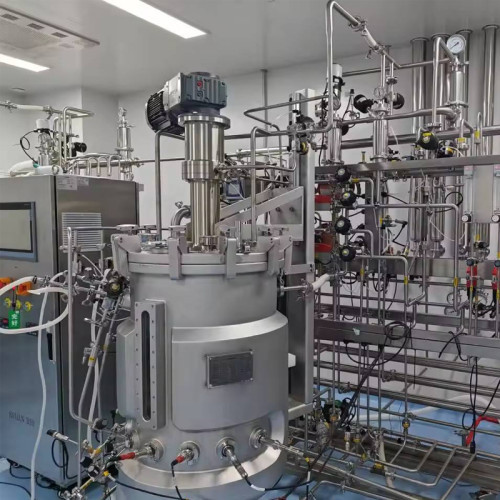
Why do some laboratories refer to it as a bioreactor and others as a fermenter? Is it only a habit? Or does the name make a difference in how you grow your bacteria or cells?
At its root, the bioreactor vs fermenter debate is straightforward. The two terms are very similar. It's what you grow, the tank, how clean it has to be, how you regulate it, and how large it becomes, where the actual gaps are.
To grow microorganisms for metabolites (useful substances) or biomass, a fermenter is commonly utilized. Bioreactor is the more general word. It develops bacteria, it also grows cells, such as human cells or cells from plants. It generally has more sophisticated monitoring and control.
Bioreactor vs Fermenter at a Glance: The Core Differences
A tank used to grow microorganisms is called a fermenter. Examples include bacteria, yeast, and fungi. It creates stuff like alcohol or anti-biotics. Sometimes the aim is more microorganisms. A bioreactor is a tank where bacteria or live cells are grown.
Cells from both plants and mammals can be grown using it. These cells require extra attention to be healthy. Often their controls are more sophisticated. In reality, most fermenters are a kind of bioreactor. A fermenter is not always a bioreactor.
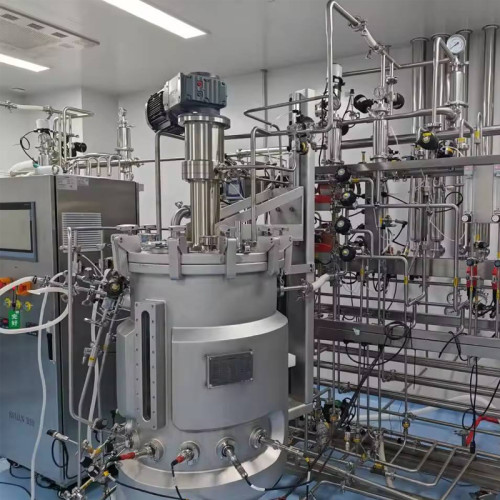
Fermenter and Bioreactor Compared
Factor | Fermenter | Bioreactor | Why it matters |
|---|---|---|---|
What a Fermenter Really Does Inside the Tank
Microbes grow and produce a product in a fermenter. Microbial Fermentation : The bacteria consume the food in the liquid. As they mature, they produce good things. Common examples include alcohols and antibiotics.
The compact variant is a lab fermenter . Teams utilize it to test early. They also utilize it to tweak a procedure before they shift to a larger tank.
Batch, Fed-Batch and Continuous Modes
Batch: Everything is put in at the beginning. The run is complete when the product is ready.
Fed-batch: Fresh food is put in throughout the run. Nothing is revealed till the very end.
Continuous: You put in fresh liquid food. Out emerges product.
Most modern units can run in more than one mode.
Where a Bioreactor Goes Beyond Microbes
Bioreactors can develop many types of living organisms, not simply bacteria. A bioreactor for cell cultivation is developed for sensitive cells. It keeps track of how many cells there are. It also maintains a constant level of food and growth nutrients.
Mammalian cells are usually grown at ~37°C. They do not like to be stirred roughly. Cells from plants tend to develop more slowly and may clump. They also need to be mixed gently.
It's different with the tiny fermenter. It is primarily designed for rapid microbial growth, short testing, and process adjustment. Bioreactors also function for tissue engineering and enzyme reactions.
Stirred Tanks, Aeration and Agitation: How the Vessel Works
A stirred tank bioreactor is a tank with a shaft and impellers operated by a motor. Impellers are rotating blades that mix the liquid. Their design, speed, and tank shape dictate how evenly food, oxygen, and cells are distributed.
Oxygen is added via aeration and agitation acting together. Bubbles are produced by introducing air via a sparger. The impeller splits the bubbles into smaller bubbles. Instead, oxygen-permeable barriers are used in certain cell cultures.
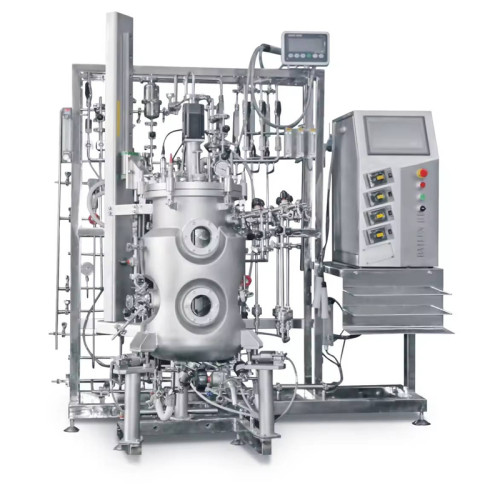
Stirred Tank vs Mini Bioreactor
Feature | Stirred tank | Mini bioreactor |
|---|---|---|
Tanks are often made of stainless steel . It is sturdy and does not rust. It is also simple to sanitize. Small glass tanks are used in laboratories.
Staying Contaminant-Free: Sterilization Basics
Sterilization is done before a run to eradicate harmful germs. One wayward bacterium may spoil a culture. So each tank requires a set schedule.
Make sure the tank and parts are clean before usage.
Sterilize the setup. Small pieces may be autoclaved; It uses steam at about 121°C.
Keep everything sterile throughout the run. Use air line filters to keep impurities out.
Common concerns are: germ-free, foam, heat build-up, and variations in raw material quality.
Process Control: The Parameters That Make or Break a Run
Process control implies maintaining critical parameters constant throughout a run. The key ones are temperature, pH, dissolved oxygen (oxygen in the liquid), stirring speed, food supply, and pressure.
Sensors That Do the Watching
Temperature, pH, and dissolved oxygen sensors
Density sensors of cells
Optional sensors for metabolite level, gas mixture, and pressure
The software records the data live. Operators have some flexibility. Bioreactors generally need more rigorous regulation than fermentors. cells are less tolerant than most microorganisms
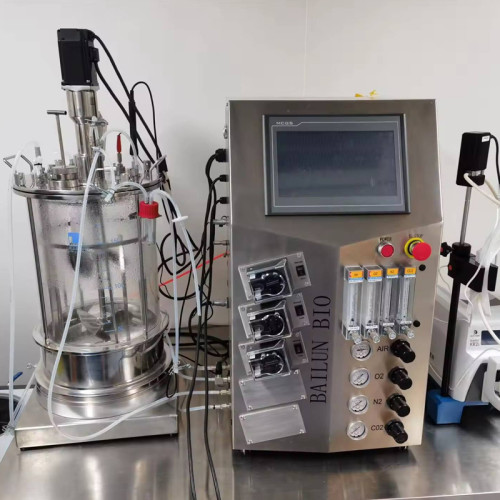
From Bench to Plant: What Changes When You Scale Up
Scale-up is taking a functioning process up to a larger tank. The larger tank has less surface area relative to its size. So it's difficult to get heat away.
When you go to a stirred tank from a micro bioreactor, check mixing, mass transfer and heat transfer again. Mass transfer is a measure of how well substances like oxygen get into the liquid. We also need to deal with larger volumes and flows in control systems. Math models and pilot runs predict huge tank performance.
Choosing Between the Two: A Simple Decision Guide
For bacteria, metabolites, or biomass, use a fermenter-type system. Choose a bioreactor-type system for mammalian or vegetative cells or if you want finer control. Try it in the lab first. Then scale up.
Quick Checklist
Culture type
Working volume
Control needs
Sterility needs
Mistakes to Avoid When Comparing the Two
Seeing the two names as fixed boxes. Both terms are used jointly by many merchants and publications.
Do not run a pilot before a large construction.
Stirring cells as hard as microbes. Cells require gentler mixing.
Forget foam. It may block filters and damage the oxygen supply.
Who is behind this guide?
These facts come from the Bailun Biotech (Jiangsu) website.
Factory introduction: Bailun makes bioreactors and fermenters. The head office and factory are in Jiading District, Shanghai. A base factory is in Ganyu District, Lianyungang, Jiangsu.
Factory scale: 5,000 m² (Haizhou District, Lianyungang), 56,000 m² (Ganyu District, Lianyungang), 2,600 m² (Jiading District, Shanghai) and 12,000 m² (Songjiang District, Shanghai). The team has about 500 staff.
Factory certification: ASME U Stamp and the ISO 9001 quality management system.
Delivery cycle: Lab equipment takes 2–3 months. Pilot equipment takes 3–4 months. Industrial equipment takes 4–12 months.
Focus: The biopharmaceutical and bioengineering industries.
Frequently Asked Questions
What is the difference between a bioreactor and a fermenter?
Microbes that produce alcohol or antibiotics may be grown in a fermenter. The more general word is bioreactor. It develops microorganisms and cells, such as mammalian and vascular cells. It requires more observation and greater management.
Is a fermenter a type of bioreactor?
“Mostly, yeah.” Bioreactor is the general term. Fermentor is utilized when the bacteria proliferate in the tank. Many sites use both terms for the same kind of tank.
Can a bioreactor be used for fermentation?
Yes. Cells as well as microorganisms are grown in a bioreactor. It may be used in batch or continuously. The temperature, pH, oxygen, stirring speed, and pressure are controllable.
Do mammalian cells need a different vessel than bacteria?
Yes, often. Mammalian cells are more fragile. They need delicate stirring, tight control, and a very clean set up. Bacteria want to be stirred more quickly. Often they require more air.
Why is stainless steel common in large tanks?
Stainless steel is tough and does not rust. It also deals with repeated sterilizing. This is beneficial for large tanks that run a lot of batches. Laboratory jars are frequently of small size and of glass.
How long does it take to receive a bioreactor from a manufacturer?
It is dependent upon size. Laboratory equipment: Bailun Biotech 2-3 months. Pilot equipment takes 3-4 months. Industrial equipment: 4–12 months
Conclusion
Growing microbes? Pick a fermenter. Growing cells, or need tight control? Pick a bioreactor. In the bioreactor vs fermenter choice, look at your culture, how clean it must be, and how big you will go. Test small first. Then go bigger.
Have equipment questions? Contact Bailun Biotech (Jiangsu) Co., Ltd. on its website. It works with the biopharmaceutical and bioengineering industries. It has ASME U Stamp and ISO 9001 certification . It lists delivery times for lab, pilot and industrial equipment.