Can a Lab Glass Fermenter Manufacturer Build a Custom System? Size, Drive, Controls?
- Share
- Issue Time
- Oct 5,2026
Summary
Yes. A lab glass fermenter manufacturer like Bailun Biotech can build a system that fits your process. You pick the size of the glass vessel, from 0.2L to 40L. You choose a magnetic or mechanical drive. Then you add the Siemens PLC controls, sensors and pumps. It all starts with a document called a URS (user requirement specification), which lists what you need.
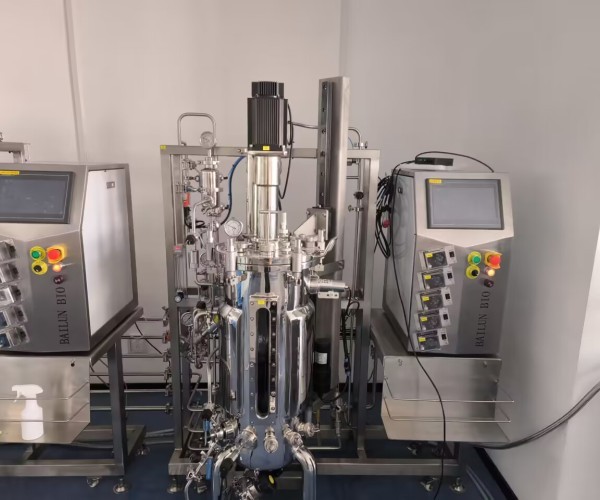
Your cells need gentle mixing. Your team wants Siemens controls. Your bench only has room for a small tank. Can one company build all of this for you? Or do you have to buy a ready-made model?
Bailun Biotech (Jiangsu) Co., Ltd. is a lab glass fermenter manufacturer. It has over 25 years of work in fermentation and cell culture. In that time, it has learned one simple thing. A good lab system starts with your process, not with a product list.
In this guide, you will learn what you can change and how big a glass unit can be. You will see which drive to pick and how the controls work. You will also learn how a build works and how to check a supplier.
Can you get a custom build?
Yes. A lab glass fermenter manufacturer like Bailun Biotech can build a system that fits your process. You pick the size of the glass vessel, from 0.2L to 40L. You choose a magnetic or mechanical drive. Then you add the Siemens PLC controls, sensors and pumps. It all starts with a document called a URS (user requirement specification), which lists what you need.
What Can You Customize on a Glass Fermenter?
You can change almost every working part of a laboratory glass fermenter to fit your process. Bailun is a lab glass fermenter manufacturer , and it shares the main options below.
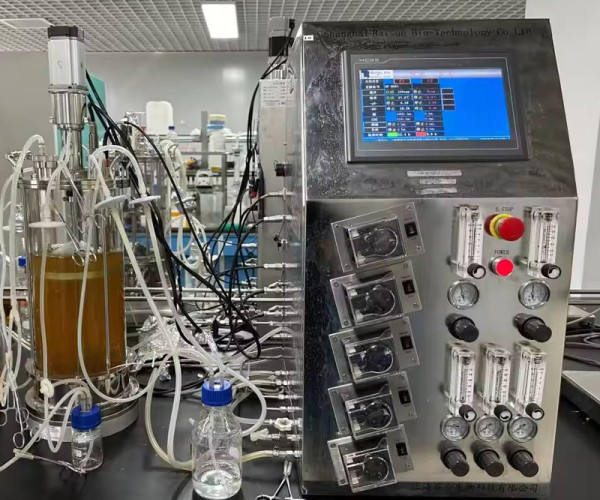
Custom Options for a Glass Fermenter Bioreactor
Area | What Bailun offers | What you decide |
|---|---|---|
These numbers come from Bailun's spec sheet. Your quote will show the exact numbers for your glass fermenter bioreactor.
How Big Can a Lab Scale Glass Fermenter Be?
A lab scale glass fermenter from Bailun can be as small as 0.2L or as big as 40L. Its Lab glass fermenter product group covers 2L to 40L. Bailun also makes bioreactors from 0.1L up to 1000KL. This means one company can supply your lab, pilot and production units.
Do you want to run small tests side by side? Then look at the benchtop dual-tank bioreactor . It is a good benchtop glass bioreactor choice. Each tank holds 0.25L to 10L. The two tanks can run together or one at a time. Each tank can be made of borosilicate glass or stainless steel.
Why Working Volume Matters More Than Size
Working volume is how much culture you can put in the tank. Bailun's spec sheet sets it at 30% to 70% of the full size. So a 5L glass fermenter holds about 1.5L to 3.5L of culture. Choose your size by your real batch, not by the number on the label.
When 40 Liters Is Not Enough for Your Process
If you need more than 40L, move to stainless steel. Do the same if you want to sterilize the tank where it stands. This is called sterilization in place (SIP). Bailun's stainless steel tanks come in sizes from 2L to 500KL. Its jacket tanks are designed for 0.3 MPa of pressure. Need a bigger bench unit? Ask about the Lab fermenter (SS316, 5L-50L) range.
Magnetic or Mechanical Drive: Which One Fits?
The best drive is the one your culture needs. Bailun makes both types. Most of the time, your choice depends on one thing: are you growing cells or microbes?
Three Drive Layouts Bailun Offers
Mechanical drive on top
Mechanical drive on bottom
Magnetic drive on top
All three use 3 six-blade paddles. You can move each paddle up or down. You can also add a double mechanical seal. A magnetic drive spins the paddles without a shaft going through the lid. A mechanical shaft is better for heavy mixing.
Matching the Drive to Cells or Microbes
A glass fermenter for cell culture needs gentle mixing. Strong mixing creates shear. Shear is a force that can harm delicate cells. Bailun lists these units under its magnetic mixing glass fermenters .
A microbial glass fermenter needs something else. Bacteria, yeast and fungi need more oxygen and harder mixing. For these, ask about a mechanical drive and the double seal.
How Do You Build the Control System Around Your Process?
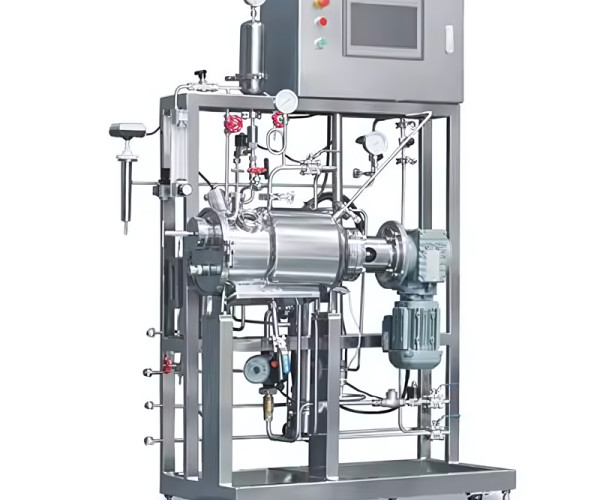
On a lab glass bioreactor, the control system is where you can change the most. A Siemens PLC runs it. A PLC is a small computer built for machines. It controls stirring, pH, DO, temperature, feeding, alarms and gas.
Core Loops: pH, DO, Temperature and Stirring
The table below shows the main numbers. They come from the BLBIO-GCUC cell culture bioreactor page.
Loop | Published range | How it works |
|---|---|---|
Bailun uses pH and DO sensors made by Hamilton or Mettler. Bailun lists both as Swiss brands.
Optional Sensors, Gas Lines and Data Tools
Gas: a basic flow meter (rotameter) sends in 1 vvm of air or O2. You can add a mass flow meter, O2/N2/CO2 lines, 2 vvm flow and a CO2 check on the gas that leaves the tank.
Extra sensors: you can add sensors for level, OD (how cloudy the culture is), ORP, weight and biomass.
Software: it can study, save and export your data. It works in three languages. Remote control and printing are also options.
Want to see a fully loaded system? Look at the benchtop dual-tank. Each tank has 4 pumps. It keeps the temperature within ±0.1 °C. It stirs at 50 to 2000 rpm, accurate to ±1 rpm.
How Does a Custom Build Move From URS to Delivery?
At Bailun, a custom build has five steps. You can see each one on Bailun's customized services page.
The Five Project Stages
First talk: You share your URS and budget. Together, you plan the layout, the equipment, and the instruments and controls.
Basic design: Bailun draws the process flow diagram (PFD) and the piping and instrument diagram (P&ID). It also sets the layout, equipment specs, parts list and a validation plan.
Detailed design: Bailun writes a project manual. It makes parameter tables, P&ID and 3D drawings. Then the design is reviewed.
Building and setup: Bailun builds the system with quality checks along the way. It tests the full unit, writes a test report and packs it. Then a team installs and tunes it on site.
Hand-over: Bailun helps with GMP validation (FDA, EU, TGA). You get a maintenance manual and staff training. Bailun also makes a return visit and offers ongoing maintenance.
What to Send Before the First Design Call
Start with your URS. It should say how you will use the system and what results you need. It should also list the rules you must follow. No URS yet? Ask your Bailun contact for a template. You can also just answer two questions from Bailun's contact page. Are you growing bacteria or cells? And what will the product be used for?
Also share your batch size and your strain or cell line. Say which drive, controls and sensors you want. Tell Bailun the gases and data you need. Last, check your site power. Is it 220 V or 380 V? Is it 50 or 60 Hz?
How Long Does a Lab Unit Take to Deliver?
A lab unit arrives in 2 to 3 months. A pilot unit takes 3 to 4 months. A large factory system takes 4 to 12 months. If anything breaks on the way, Bailun replaces it for free.
How Do You Choose a Lab Glass Fermenter Manufacturer?
A good lab glass fermenter manufacturer has three things you can check. It owns its factories. It sticks to one main field. And it shows its certificates openly.
Bailun's main office and factory are in Jiading, Shanghai. Its base factory is in Ganyu, Lianyungang. The Bailun company profile shows four sites. They are 5,000, 56,000, 2,600 and 12,000 m² in size. Bailun has 500 staff and customers in 86 countries.
Bailun works mainly in biopharma and bioengineering. It makes its own equipment and is not a trading company. It also has its own cell culture research center. Bailun can handle the whole job for you. This covers 3D design and CFD flow modeling. It also covers tests at the factory (FAT) and at your site (SAT), plus training.
You can see Bailun's ISO 9001 and ASME certificates online. Bailun also has CE marking. It holds a license to make pressure vessels and a certificate to make special equipment. It even owns software copyrights for remote control and online testing.
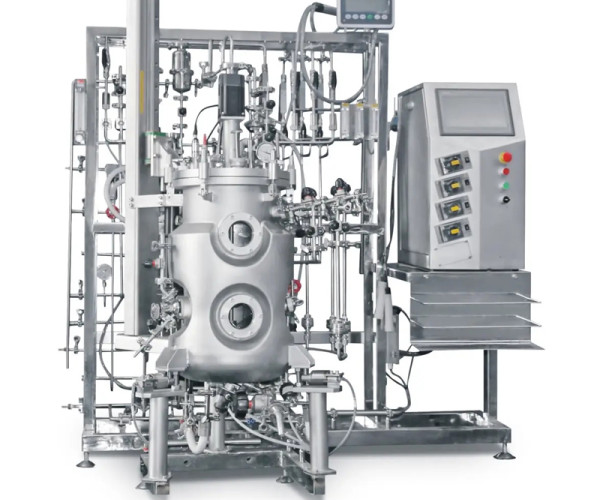
Three Documents to Request From Any Supplier
The machinery test report
The outgoing inspection video
A written spec sheet that shows the glass vessel's own limits
Bailun's product pages say it gives you the first two.
FAQs
Can Two Glass Vessels Run in Parallel?
Yes, the dual-tank benchtop glass bioreactor can run two tanks at once. You can run them together or one at a time. Each tank has its own controls for pH, DO, temperature and stirring.
Each tank holds 0.25L to 10L.
It is great for testing two strains or two media side by side.
Is a Laboratory Glass Fermenter Good for Cell Culture?
Yes, a glass fermenter for cell culture works well if the mixing stays gentle. Bailun lists animal (mammalian) and plant cells among its uses.
The benchtop unit has impellers that mix gently.
Careful oxygen (DO) control helps delicate cells.
Can a Glass Fermenter Vessel Be Autoclaved?
Yes, the benchtop dual-tank can vessels go in a standard autoclave. The tanks, pipes and seals come apart easily for cleaning.
You can also clean them in place (CIP).
Want to sterilize without moving the tank? Choose stainless steel.
Is There a Minimum Order for Custom Units?
The minimum order is just 1 unit. Bailun takes both custom and OEM orders.
You can order a single lab system.
Send your URS or a short process description first.
Does Bailun Install Equipment Overseas?
Yes, Bailun installs equipment overseas. Its technicians set up and adjust the system at your site.
Its engineers can also service machines overseas.
Staff training is part of the hand-over.
Can Lab Glass Bioreactor Software Be Updated After Delivery?
Yes, all the software can be updated online. No one needs to visit your lab to do it.
You can also add remote control.
The screen can show Russian, English or Chinese.
Conclusion
The right lab glass fermenter manufacturer builds the system around your culture. This is true for a microbial glass fermenter. It is also true for a 5L glass fermenter used for cell lines. The size, drive and controls should all match what you grow.
Bailun Biotech (Jiangsu) Co., Ltd. is a good fit if you want one supplier for everything. It can take you from a 0.2L glass vessel all the way to full production. To get started, send your URS. Or just tell Bailun if you grow bacteria or cells, and what the product is for. Then request a custom quote .