Mammalian Cell Bioreactor Scale-Up, 5L to 2000L
- Share
- Issue Time
- Nov 3,2026
Summary
Mammalian cell bioreactor scale up means moving a cell culture from a small tank to a bigger one. Cells should grow the same way. Product quality should stay the same. A common path goes from a 5L bench tank to a 2000L plant tank. Bailun's mammalian cell bioreactor range runs from 5L to 10KL.
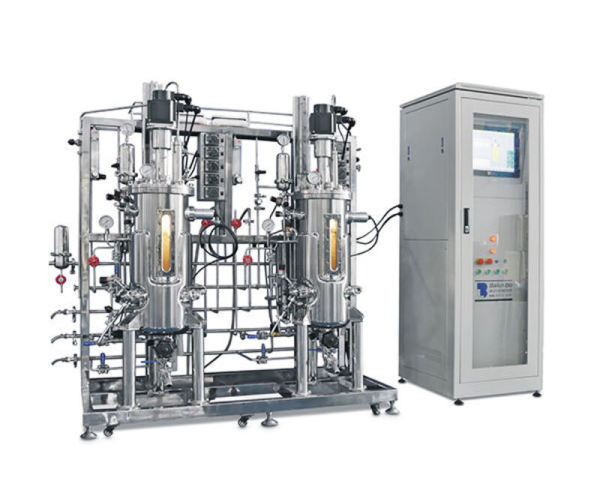
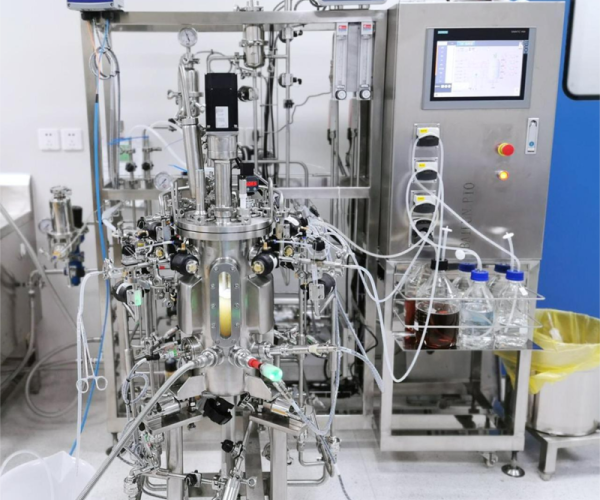
Mammalian cell bioreactor scale up means moving a cell culture from a small tank to a bigger one. Cells should grow the same way. Product quality should stay the same. A common path goes from a 5L bench tank to a 2000L plant tank. Bailun's mammalian cell bioreactor range runs from 5L to 10KL. Several things affect the result. They are CHO cells, the seed train, kLa, power per volume, impeller tip speed, shear stress and fed-batch culture. If you miss one, the next volume can fail. A process that works at 5L can act very differently at 200L or 1000L. The cells stay the same. The tank does not. Mammalian cells are fragile. CHO cells have no tough outer wall, so rough handling can hurt them. In a big tank, mixing takes more time. Oxygen has farther to go. Stirring and bubbling put more stress on each cell. Small gaps at bench size become big gaps at plant size. A culture can mix well in one liter. In a large tank, it can still form dead zones. So mammalian cell bioreactor scale up needs a new check of mixing, oxygen supply and shear stress at every new volume. Mammalian cell bioreactor scale up works by matching one key parameter between a small tank and a larger tank. Engineers pick a rule, such as power per volume or kLa. They test it at the next volume. Then they check how the cells grow and how good the product is. If all is well, they move on. Run the process at bench scale. Choose the key parameter. Pick the scale-up rule. Test the rule at the next volume. Check growth, viability and product quality. Go to the next volume and repeat. You cannot keep every parameter fixed at once. Parameter Common scale-up rule Bailun hardware link A seed train grows cells step by step. It starts in a small vessel and ends in the production vessel. Each step makes enough cells to start the next one. Every transfer needs care. A weak inoculation can slow growth. It can also let germs in. Bailun lists two ways to inoculate: a 4-valve group or pin-in with flame protection. The sampling valve can be sterilized on its own. Seed transfer and batch culture are also listed. Bailun also has hands-on work with CHO cells. In its article on ATF and TFF , the team grew CHO cells to make mAb in a 2 L reactor. This is why a clean seed train matters for mammalian cell bioreactor scale up. kLa shows how fast oxygen moves from gas into the culture liquid. A higher kLa means faster oxygen supply. Cells need more oxygen as their number and the tank size grow. A larger tank has less surface area for each liter of liquid. So oxygen is harder to deliver. Gas flow and stirring must work harder. Bailun's DO control runs 0-150 ±3%. The display precision is 0.1%. DO is coupled with agitation and oxygen. A rotor meter controls gas at 1 vvm air flow or O2 flow. Options are a mass flow meter for automatic gas control, O2/N2/CO2 gas and a gas flow of 2 vvm. Power per volume (P/V) is the energy the stirrer puts into each liter of liquid. Impeller tip speed is how fast the blade edge moves. Both help keep mixing the same at each scale. The two can pull against each other. In tanks of the same shape, steady P/V makes tip speed rise as the tank grows. Steady tip speed makes P/V fall. Engineers must balance good mixing against cell damage. Bailun's stirring system has three height-adjustable six-blade paddles. The drive is mechanical (top or bottom) or magnetic (top). The tank diameter to height ratio is 1:2.2-2.5. Stir speed is listed as 50~1000rpm/50-400rpm. Shear stress is the force that stirring and bubbling put on cells. Mammalian cells have no tough outer wall. Too much shear can damage them. The impeller type, stir speed and gas flow all affect shear. Faster stirring and strong gas flow raise it. In large tanks, it is harder to avoid. Bailun's article has an example. One 2 L CHO run compared pump types. The team held the shear rate below 2000 s⁻¹. Peristaltic-pump TFF showed slower growth and faster viability loss than ATF. With a low-shear centrifugal pump, TFF matched ATF on growth, viability and 100 nm particle count. Fed-batch culture means nutrients are added during the run. They are not all added at the start. This keeps cells fed as they grow. Bailun lists three automatic functions: feeding by peristaltic pump, antifoam by peristaltic pump, and adding acid or base for pH. The controller tracks stirring, pH, DO, temperature, feeding, alarms and gas. Bailun's article says fed-batch still has an important place in the market. Perfusion is getting more notice. The article adds that perfusion can often reach higher viable cell density and viability. Bailun offers an automatic perfusion system. It uses TFF with a low-shear centrifugal pump. One unit supports 50-500 L. These specs apply to mammalian cell bioreactor scale up at every size. You can find the full range on the Mammalian cell bioreactor (5L-10KL) page. Spec Listed value Bailun supports mammalian cell bioreactor scale up from the first request to the final sign-off. The steps are URS, PFD and P&ID, CFD modeling, production, installation, debugging, FAT, verification, SAT and training. A cell culture tech R&D center helps with this work. It supports cell culture and preservation, bioreactor validation and large-scale cultivation. The team also provides GMP validation (FDA, EU, TGA, cFDA). Delivery takes 2-3 months for lab equipment, 3-4 months for pilot equipment and 4-12 months for industrial equipment. Bailun focuses on the biopharmaceutical and bioengineering industries. It serves Cell Therapy, Biopharmaceutical, Vaccine and Biological Enzyme Preparation. Its certificates include ASME U Stamp and ISO 9001. Ganyu District, Lianyungang: 56,000 m² Songjiang District, Shanghai: 12,000 m² Haizhou District, Lianyungang: 5,000 m² Jiading District, Shanghai: 2,600 m² Staff: 500 You scale up mammalian cell culture by matching one key parameter as the volume grows. Power per volume and kLa are two examples. Test the rule at each step. Then check growth and product quality. Repeat this at every new volume. Temperature, pH and DO setpoints stay constant during scale-up. So does one chosen mixing or oxygen rule. Not every rule can hold at once. If you fix power per volume, impeller tip speed rises. Bailun's mammalian cell bioreactor range runs from 5L to 10KL. Its tank spec lists volumes from 5L to 1000L and 5KL. For other sizes, share your mammalian cell bioreactor scale up plan with the Bailun team . Mammalian cell bioreactor scale up works best when you test each step. Every parameter needs a clear rule. Match oxygen supply, mixing and shear stress at every volume. Keep the seed train and the feeding plan steady. Bailun Biotech (Jiangsu) Co., Ltd. is a good fit for this work. Its mammalian cell bioreactor range covers 5L to 10KL. Its team helps with each project from URS through SAT. Share your process details with its engineers to start a clear plan. Why Scale-Up Often Fails at Larger Volumes
How Mammalian Cell Bioreactor Scale Up Works
Steps in Scale-Up
What Stays the Same and What Changes?
Building a Seed Train for CHO Cells
Matching Oxygen Supply With kLa
Power per Volume and Impeller Tip Speed
Keeping Shear Stress Low in Large Tanks
Fed-Batch Culture at Every Scale
Where Perfusion Fits
Bailun Bioreactor Specs From 5L to 5KL

Tank Details
Bailun Support From URS Through SAT
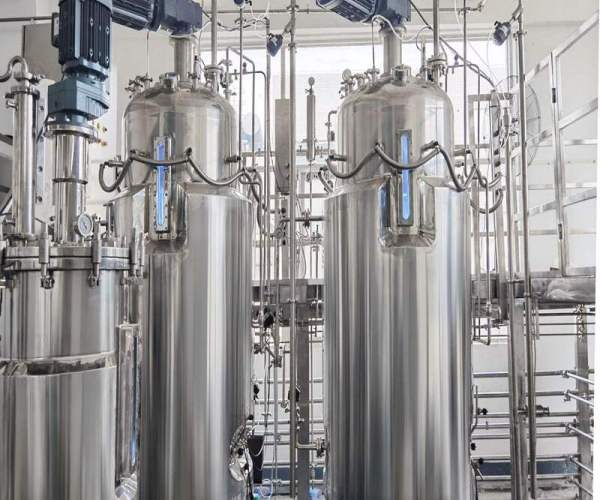
The Bailun Factory
Factory Size
FAQs
How do you scale up mammalian cell culture?
What parameters stay constant during scale-up?
What is the largest bioreactor for mammalian cells?
Conclusion