What Are the Types of Bioreactors? Stirred, Airlift, Packed Bed?
- Share
- Issue Time
- Oct 25,2026
Summary
A bioreactor is a closed tank that contains live cells, microorganisms, or enzymes. It maintains the circumstances. So every run will yield the same result.
The system manages temperature, pH, oxygen, nutrients, and mixing. Each value is adjusted using sensors and a controller. Gas comes in via a sparger. The sparger makes tiny bubbles. The liquid is moved by a rotating blade called an impeller or by gas flow.
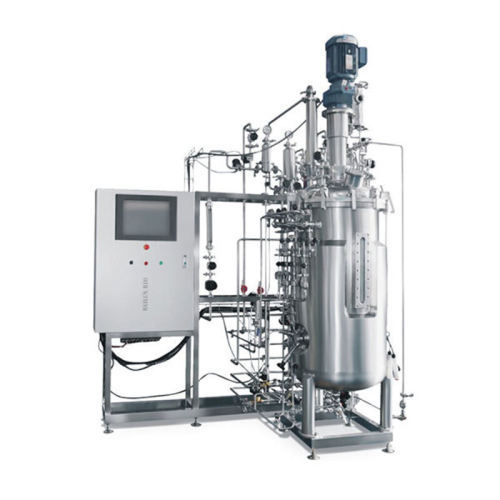
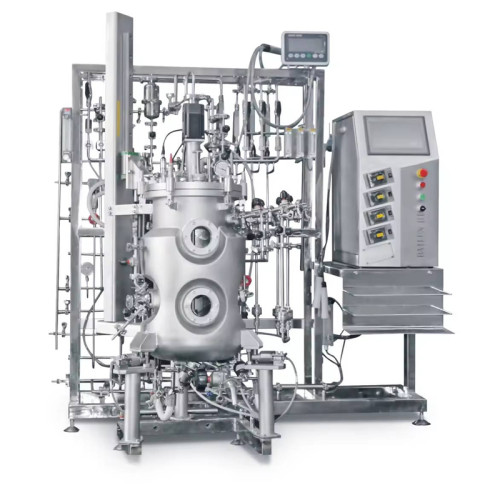
The main types of bioreactors are stirred tank, airlift, packed bed, fluidized bed, and photobioreactor. Single use and membrane are other popular forms. With the other categories, you may pair them. Each kind expresses culture in its own manner. The three most popular are stirred tank, airlift, and packed bed. Your culture determines which one suits. Bailun Biotech (Jiangsu) Co., Ltd. makes fermenters and bioreactors. A bioreactor is a closed tank that contains live cells, microorganisms, or enzymes. It maintains the circumstances. So every run will yield the same result. The system manages temperature, pH, oxygen, nutrients, and mixing. Each value is adjusted using sensors and a controller. Gas comes in via a sparger. The sparger makes tiny bubbles. The liquid is moved by a rotating blade called an impeller or by gas flow. A fermentor is the same kind of equipment. You may also see it spelled fermentor. The term is often used of bacteria. They also state that a bioreactor is used for cell culture. Seven designs cover most needs. Type Mixing method Best suited for Main limit Single-use and membrane are formats. You can pair both with different mixing types. The stirred tank is the classic bioreactor design. Stirred tank bioreactors are cylindrical tanks. It features a gas sparger and a motor-driven impeller. Gas is introduced from the bottom via the sparger. The bubbles are subsequently distributed through the liquid by the impeller. The sparger may consist of a ring with multiple holes. It might also be a tube with one entrance. This enables a continuous transport of oxygen. The temperature is also even. Stirred tank systems are most effective when a process must scale from lab to production. This architecture is the basis of many biopharma procedures. Cytiva provides single-use units from 15 mL to 2000 L. Steel units get bigger. Bailun fermentor lines include mechanical agitation fermentors and magnetic agitation fermentors. Its site offers lab fermentors (SS316, 5L-50L) and industrial fermentors (1KL-400KL). An airlift bioreactor is a bubble column with a draft tube. It has no agitator, or moving mixer. One zone has rising gas. This is called the riser. In the opposite zone liquid flows down. This area is termed the downcomer. The two routes are separated by the draft tube. Without an agitator, the device has fewer moving parts. Requires little upkeep. Also, it's easy to clean. Airlift units are suitable for shear sensitive microorganisms. Shear is the drag that flowing liquid exerts on cells. The penalty is that the mixing is not as vigorous as in a stirred tank. This may limit the extremely high demand for oxygen. Low shear gentle mixing and uniform aeration are mentioned on Bailun's airlift website. Cell development and microbial fermentation are named as applications. An air lift fermentor is also included on its About page . A packed bed bioreactor is a column filled with solid particulates. The biocatalyst is in the particles. This is the cell or enzyme that accomplishes the job. It rests on top of or within the particles. A nutrient soup is pumped through the column. It is referred to by some as a fixed-bed reactor. In certain cases, fixed-bed units are used for attachment cells. These are cells that only proliferate when linked to a surface. Poor mixing makes it hard to manage pH. The solid support is suspended in a fluidized bed of the liquid. This enhances mixing and mass transfer. Mass transfer is a way of measuring how well oxygen and nutrients get to the cells. One recognized issue is poor fluidization. Heavy particles might gather on the distributor plate. Photobioreactors are vessels using either direct sunlight or artificial light. It grows algae and other light-requiring cultures. Light delivery drives vessel design. The culture can also need chilling. Bailun's About site features a "light bioreactor" among its fermentors. A disposable bioreactor is a bioreactor in which the tank is substituted with a disposable bag. No cleaning or sterilizing between batches. Both stirred and rocked versions are used in the biopharma industry. The trade offs include bag expense and bag disposal. Rocking units employ a bag on a moving platform. They scale from a few liters to about 100 L, explains Cytiva. On its website, Bailun offers disposable bioreactors. They're fantastic for rapid setups and less chance of contamination, states the single-use page. A membrane bioreactor is a reactor which employs a membrane to retain cells or particles. The name has two popular meanings. One is membrane filtration and biological therapy. The other is the hollow fiber system for the cultivation of animal cells . In perfusion the medium utilized flows out. The cells remain in. This may be done either using hollow fibers or packed beds. The major problem is fouling and blockage. These slow the flow down over time. The right bioreactor depends on four things. Start with the culture. Then match the design. Factor Question to ask Design that often fits Think about size too. Reusable tanks must be cleaned and sterilized after each run. Single-use bags skip this step, but you pay for each bag. Start with your process. Then match the design. Bailun Biotech (Jiangsu) Co., Ltd. is a bioreactor manufacturer . It describes itself as a leading provider of intelligent, data-driven bioreactor systems. It produces laboratory, pilot and industrial bioreactors. They comprise fermentation tanks, animal cell, plant cell and disposable bioreactors in the range of 0.1L to 1000KL. It is a firm in the biopharmaceutical, bioengineering sectors. It conducts R&D, design, manufacturing and checking. It is based on hygienic containers and modular process equipment. Factory sites: Lianyungang has 5,000 m² (Haizhou District) and 56,000 m² (Ganyu District). Shanghai has 2,600 m² (Jiading District) and 12,000 m² (Songjiang District). Team and reach: 500 staff and 86 nations. Certificates: ASME U Stamp, ISO 9001, and CE. Delivery time: lab equipment 2-3 months, pilot equipment 3-4 months, industrial equipment 4-12 months. The four types named most often are stirred tank, airlift, packed bed, and fluidized bed. Sources group them in different ways. Longer lists add bubble column and photobioreactor. Stirred tank: a blade mixes the liquid Airlift: rising gas moves the liquid Packed and fluidized bed: solid parts hold cells The stirred tank is the most used bioreactor. Bailun also offers mechanical agitation fermenters of this kind. It is the classic design It is easy to scale up Many biopharma processes are built on it Bubble column and airlift designs are the simplest to build. Neither has an agitator. Airlift is simpler than a stirred tank. Fewer moving parts to maintain Batch is the simplest way to run any design An airlift bioreactor is a bubble column with a draft tube added. The draft tube gives the liquid a clear path. Bubble column: gas enters at the bottom Airlift: one zone for gas, one for liquid A photobioreactor is used to grow algae and other cultures that need light. It runs on sunlight or artificial light. Light shapes the vessel design It may need cooling The four modes of operation are batch, fed-batch, perfusion, and continuous. Batch is the simplest. Fed-batch is the most common. Batch: nothing is added or removed during the run Fed-batch: fresh feed is added during the run Perfusion: used liquid is removed while the cells stay The types of bioreactors differ in how they mix and how they hold cells. Your culture decides which one fits, so start there. Bailun Biotech (Jiangsu) Co., Ltd. offers mechanical agitation, magnetic agitation, airlift, and disposable systems. One maker can cover many of these types. Sizes run from 0.1L to 1000KL, from lab work to large plants. Lab equipment arrives in 2-3 months. Industrial equipment takes 4-12 months. Share your culture and volume with the team to find a fit.What Is a Bioreactor and How Does It Work?
The Main Types of Bioreactors at a Glance
Seven Bioreactor Designs Side by Side
Stirred Tank Bioreactor Design and Uses
How Impellers and Sparkers Mix the Culture
Where Stirred Tank Systems Work Best
Airlift Bioreactor and Low-Shear Mixing
Riser, Downcomer, and Draft Tube Basics
Where Gentle Mixing and Steady Air Help

Packed Bed Bioreactor for Fixed Cell Support
How a Fluidized Bed Differs From Fixed Bed
Photobioreactor Systems for Light-Driven Growth
Single-Use Bioreactor Pros and Trade-Offs
Membrane Bioreactor and Hollow Fiber Systems
How to Pick the Right Bioreactor Type
Four Questions to Ask About Your Culture
Who Builds These Systems: Bailun Biotech
Bailun Factory Facts From Its Website
FAQs
What are the 4 main types of bioreactors?
Which bioreactor is most commonly used?
What is the simplest type of bioreactor?
What is the difference between airlift and bubble column?
What is a photobioreactor used for?
What are the modes of bioreactor operation?
Conclusion