What Is Bioreactor Working Volume? Ratio, Headspace, Foam?
- Share
- Issue Time
- Nov 17,2026
Summary
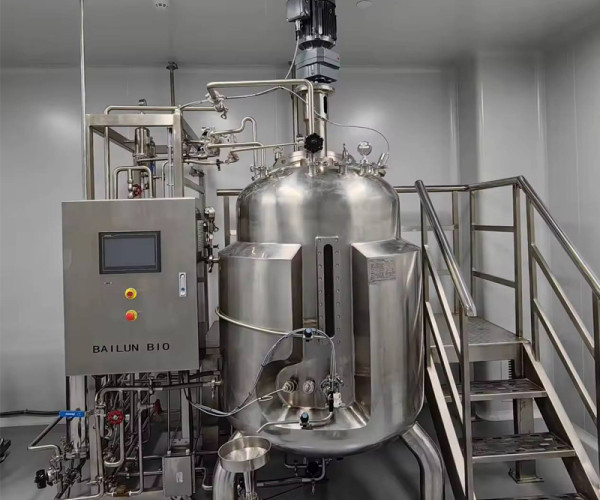
Working volume is the liquid you can use in a tank during a run. Total volume is all the space inside the tank. The gap between them is left empty for a reason. Bailun says working volume is most often 60–80% of total volume.
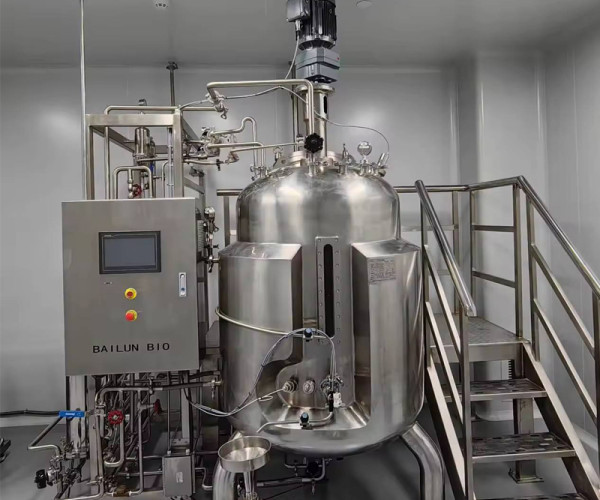
Can a 1,000 L tank hold 1,000 L of liquid? No, it can't. Many people learn this when their tank spills over. Bioreactor working volume is the liquid in a tank while it runs. It is always less than the full size of the tank. The top part stays empty. This space is for foam, gas and pressure. Here is an easy example from Bailun. A 1,000 L tank may only hold 700–800 L of liquid you can use. All the numbers here come from Bailun Biotech (Jiangsu) Co., Ltd. We took them from its sizing guide and its tank specs. The person who wrote that guide has worked with fermentation tanks for over ten years. In this guide, you will learn how to find the fill ratio. You will also learn how much headspace to leave. We will look at foam, minimum working volume and tank shape too. Last, we share the sizing mistakes people make most. Working volume is the liquid you can use in a tank during a run. Total volume is all the space inside the tank. The gap between them is left empty for a reason. Bailun says working volume is most often 60–80% of total volume. Point Total volume Working volume Bailun says you should plan with bioreactor working volume, not the full tank size. The size of the tank changes how much you make. It also changes how fast the batch ferments and how much power you use. A tank that is too small wastes time and makes too little. A tank that is too big does not mix well and makes less. The right size also changes how much each batch costs. It changes your ROI (the money you get back) too. So first decide how big your batch is. Then pick a tank that fits it. The fill ratio is how much of the tank you fill with liquid. Bailun calls it the fill fraction. Most of the time, it is between 0.65 and 0.80. The best number depends on what you are making. Working volume = total volume × fill fraction Use this to find the bioreactor working volume for a tank of any size. Find the total volume of the tank. Pick a fill fraction that suits your batch. Multiply the two numbers. The answer is your working volume. Take this answer away from the total volume. What is left is the headspace. These examples come from Bailun's sizing table. Total volume Fill fraction Working volume Used for Bailun's site shows two different ranges. Each one means something different. The sizing guide says most fermentation tanks are filled to 60–80%. Bailun's stirred steel tank pages give a different number. They list working volume as 30%–70%. You will see this on the BLBIO-SJA and BLBIO-SCUC models. The BLBIO-SJA page also calls it "feeding volume 30~70%". The first range is a general rule for most tanks. The second range is only for Bailun's own models. When you buy, go by the spec sheet for your model. Headspace is the empty space above the liquid. It keeps your batch safe. Without it, foam and gas have no room to go. Gives foam space to rise before it gets to the outlets Helps keep the pressure in the tank under control Lets gas out as the cells grow Bailun says headspace is often 15–40% of total volume. A simple rule is to leave 20–35% empty. If your batch makes a lot of foam, leave at least 20%. To find headspace, take the working volume away from the total volume. Take Bailun's 1,000 L tank as an example. 1,000 L − 750 L = 250 L of headspace. Bailun's spec lists these parts that work in the top space: A condenser before the exhaust outlet. It cools the gas before it leaves. A diaphragm valve or a proportional control valve. It controls the gas going out. A BD (Germany) pressure transmitter. It helps control the pressure on its own. A tank design pressure of 0.3 MPa and a jacket design pressure of 0.35 MPa CO₂ exhaust gas analysis, as an option Foam is a layer of bubbles on top of the broth. It takes up room that liquid could use. More foam means a smaller bioreactor working volume. Bailun's guide names three causes. The type of microbe affects how fast foam forms. Stirring speed and air flow change how high foam rises. Thick broth also limits how full you can fill. If you fill too high, foam can spill out of the tank. This can spoil the batch and block the vents. Bailun's case table shows a real example. A 50,000 L bioethanol tank was filled to 80%. It gave high output but had a small foam problem. Feature What Bailun lists vvm means how much gas goes in each minute, compared to the liquid. So 1 vvm in 100 L of broth means 100 L of gas each minute. Bailun says anti-foam systems let you fill the tank higher. It suggests anti-foam liquids or foam-level sensors. It also says to watch the foam level during the run. Minimum working volume is the smallest amount of liquid a bioreactor can run with. Bailun's stirred tanks list working volume as 30%–70% of total volume. So 30% is the lowest number Bailun lists. Ask Bailun for the exact limit of your model before you run a small batch. Filling too low is not good either. Bailun says it wastes space and makes the tank work less well. The stirred models have 3 six-blade paddles. You can move each paddle up or down. Some makers talk about the turndown ratio. This is the gap between the most and the least liquid a tank can run. It shows if one tank can handle both small and full batches. Vessel geometry means the shape of the tank. The main number here is the H/D ratio. It compares the tank's height (H) with its width (D). Many people also call it the aspect ratio. Bailun says this part of vessel geometry changes how well the tank mixes. It also changes how well air and heat move through the liquid. It even affects cleaning and the size of the stirrer. The wrong ratio can give the cells too little oxygen. The batch may also ferment unevenly. Some spots may barely move at all. These are called dead zones. A tall, thin tank has a high H/D. A short, wide tank has a low H/D. Industry Typical H/D Pros Cons High H/D (2:1–3:1): good for batches that need oxygen. It gets oxygen to the cells better. It also takes up less floor space. But it is harder to clean. It also puts more pressure on the bottom of the tank. Low H/D (1:1–1.5:1): easy to set up and easy to mix. It works better with thick broth or broth with bits in it. But you make less per m² of floor. It also needs more floor space. Pick a high aspect ratio if oxygen is your top need. Pick a low one if easy cleaning and thick broth matter more. Bailun's stirred bioreactors have a diameter-to-height ratio of 1:2.2–2.5. This means they are tall tanks. Each tank has an outer jacket to heat or cool it. It is made of SS316 and SS304 stainless steel. The inside surface is polished to 0.4–0.6 µm. The BLBIO-SCUC model also comes with a 0.2–0.4 µm finish. A conical tank has a cone at the bottom. Yeast and other bits sink down into the cone. So they are easy to take out. Many beer and wine makers use this kind of tank. A cylindrical tank is a straight round tank. It works best when the whole batch needs air and good mixing. Big plants use it more. The shape of the bottom is part of vessel geometry, just like H/D. Heat: liquid takes up more room as it gets warm. Bailun's electric heater can go from 5 °C above your water temperature up to 70 °C. Feeding: a peristaltic pump adds food for the cells during the run. This makes the liquid level go up. Acid and base: the tank keeps pH between 2.00 and 12.00, within ±0.1. A peristaltic pump adds acid or base to do this. That adds liquid too. Thick broth: if the broth is thick, you may not be able to fill as high. Bailun shares four real tanks of very different sizes. The pharma tank was filled the least. The big bioethanol tank was filled the most. Case Tank Fill used Result Try a small batch first, before you use a big tank. Use sight glasses (small windows on the tank) to see the liquid level. Write down how much you put in for each batch. If you fill low, think about a cone-bottom tank. It helps the solids settle and come out. Bailun says these are the mistakes people make most. They can raise power bills, lead to costly fixes and lower your output. Thinking total volume is the same as working volume. Always multiply the total volume by the fill fraction. Not checking the H/D ratio your batch needs. Pick it for mixing and air, not just for floor space. Leaving no foam space. Keep at least 20% of the tank empty at the top. Skipping small tests. Try your batch in a smaller tank before you go big. Buying cheap tanks with poor welds. Buy certified stainless steel tanks instead. Each part of a stirred fermenter has its own job. These parts come from Bailun's tank spec. Part What it does DO means dissolved oxygen, or the oxygen mixed into the liquid. CIP means cleaning the tank without taking it apart. SIP means using steam to kill germs inside the tank. The stirred tank is a very common type of bioreactor. Bailun's FAQ says a motor spins a mixer called an impeller. This mixes the liquid well, so every part of the tank stays the same. It can run with oxygen or without it. You just change the oxygen supply and how fast it stirs. Bailun also makes other types. These include airlift, single-use , solid-state, parallel multiple and glass bioreactors. Category Volume range The 200 L size sits in the middle. Bailun's FAQ says it is bigger than a lab tank. But it is smaller than a full factory tank. What you learn from a 200 L run can help you move up to bigger tanks. Bailun Biotech (Jiangsu) Co., Ltd. sticks to one field. It makes bioreactors, fermenters and the systems that go with them. Bailun has four factory sites. Two are in Lianyungang. One is 5,000 m² in Haizhou, and one is 56,000 m² in Ganyu. The other two are in Shanghai. One is 2,600 m² in Jiading. Bailun has 500 staff. It sells to 86 nations. Its output value is USD 80,000,000. Bailun has the ASME U Stamp, NBBI, PED and ISO 9001 certificates. Its site also lists CE and CSA. You can see them all on the certificate page . First, you send a URS (user requirement specification). This is a list of what you need. Next, Bailun draws the PFD (process flow diagram). This shows how your process will run, step by step. Bailun also draws the P&ID, a map of the pipes and sensors. After that comes the detailed design. Lab equipment takes 2–3 months to deliver. Pilot equipment takes 3–4 months. Industrial equipment takes 4–12 months. Bailun has built a 10 KL yeast fermentation plant. It has also built a 20 KL GMP workshop. Another job was a 500 L/5,000 L system for drug substance. You can read more on the customized services page . Total volume is all the space inside the tank. Working volume is the part you fill with liquid. The rest stays empty at the top. This empty space gives room for foam, gas and pressure. Bailun says a 1,000-liter tank may only hold 700 to 800 liters you can use. According to Bailun's guidance, the typical fill level for a fermenter is between 60% and 80%. An easy rule of thumb is to leave 20% to 35% of the top vacant. Reduce the amount of foam by filling the batch to a lower level. Stick to the highest fill mark the manufacturer provides at all times. To operate a bioreactor, the minimum working volume of liquid must be less than a certain threshold. Working volume ranges from 30% to 70% of total volume for Bailun's stirred steel tanks. The lowest possible percentage is 30%. You should inquire with the manufacturer about the precise limitations of your model. There is no one standard aspect ratio. Bailun says most fermentation tanks are between 1:1 and 3:1. Beer tanks are near the low end. Medicine tanks are near the high end. Bailun's own stirred tanks have a diameter-to-height ratio of 1:2.2 to 2.5. Before you start a batch, check three numbers. These are the working volume, the H/D ratio and the fill level. Base your bioreactor working volume on what you make, not on the size printed on the tank. Then leave enough headspace for foam and gas. Starting a new line? Send your URS to Bailun Biotech (Jiangsu) Co., Ltd. Its team can help you pick the right size. They can match the fill range, tank shape and controls to your batch. A good place to start is the 200L Industrial Batch Fermentation Bioreactor range. You can also read Bailun's full fermentation tank sizing guide . What Bioreactor Working Volume Really Means
Working Volume vs Total Volume
Why Plan by Working Volume, Not Tank Size?
How to find the Fill Ratio
The Simple Formula
Four Easy Steps
Examples by Tank Size
Two Ranges You Will See on Bailun's Site

Why do you need headspace?
What the Top Space Does
How Much Headspace Should You Leave?
Parts at the Top of a Bailun Bioreactor
How Foam Eats Into Your Working Volume
What Makes Foam Rise
What Happens When Foam Overflows
Foam and Gas Controls on a Bailun Bioreactor
What Is Minimum Working Volume?
Vessel Geometry and the H/D Ratio
What Does the H/D Ratio Change?
H/D Ratio by Industry
Tall Tank or Wide Tank?
The Shape of Bailun's Stirred Tanks
Cone-Bottom or Straight Round Tank?
What Else Changes How Full You Can Fill?
How to get full Do Real Tanks?
Fill Level Case Results
Bailun's Tips for Setting the Fill Level
Five Sizing Mistakes to Avoid
Fermenter Parts and What Each One Does
Fermenter Parts and Functions
Bioreactor Types and Typical Volumes

Typical Volumes by Bailun Category
How Bailun Helps You Size the Right Working Volume
Factory Size
Certificates
Custom Design and Delivery Cycle
FAQs
What is the difference between working volume and total volume?
How full should a fermenter be?
What is minimum working volume?
What is the standard height-to-diameter ratio for bioreactors?
Conclusion