What Makes Fermentation Equipment Easy To Sanitize? Surface, Port, Drainage
- Share
- Issue Time
- Jul 4,2026
Summary
Fermentation equipment refers to any tank or tool used to grow living cells or microbes. It is used for food, medicine or other products. This equipment comes in many sizes. Some are small laboratory glass jars.
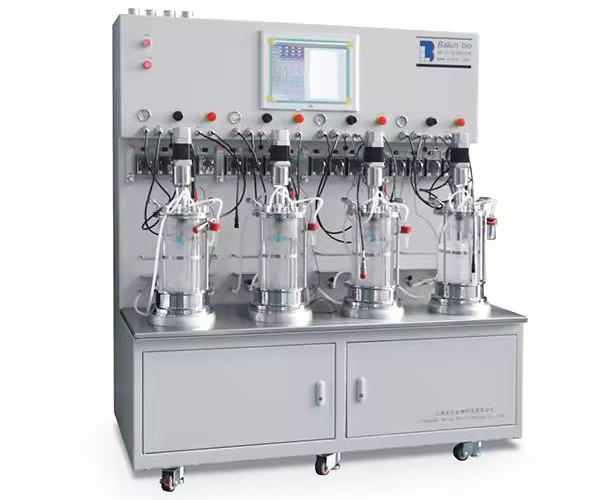
Why does one fermenter always pass the clean test? "And why does the tank right next to it keep breaking down? It's not about how hard someone scrubs. It's about how the tank was built in the first place. Working 9 years with Fermentation Equipment that I have learned.
This examine guides three factors that make fermentation tools easy to clean: surface, ports, and drains. These are actual design decisions. They decide whether cleaning is fast or slow. It's not about what soap to use. It is about the way the equipment is made.
What Is Fermentation Equipment?
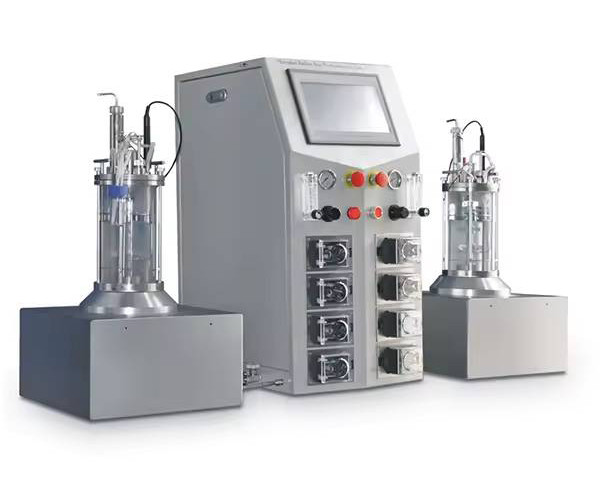
Fermentation equipment refers to any tank or tool used to grow living cells or microbes. It is used for food, medicine or other products. This equipment comes in many sizes. Some are small laboratory glass jars. Some are big steel tanks for factories. Most fermentation tools also have other components, like mixers, sensors and sample ports. Many also have an integrated washing system, known as CIP or SIP. One rule applies to all good fermentation tools and equipment. Inside has to be clean, really clean. Not merely clean to the eye.
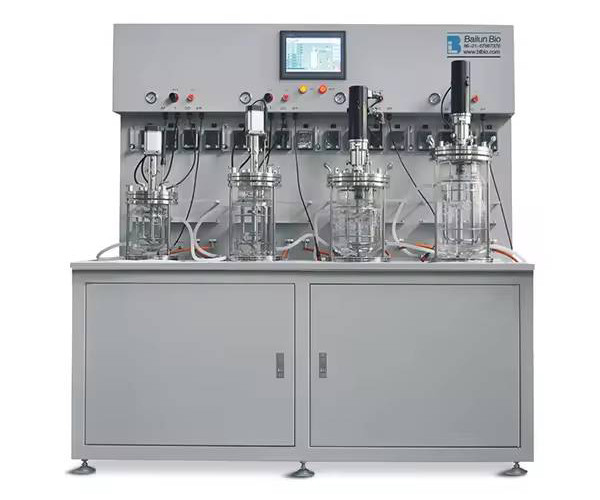
Category | Typical Size | Common Material | Used For |
|---|---|---|---|
What Surface Finish Makes Fermentation Equipment Easiest to Sanitize?
Steel is the easiest to clean, with its smooth, shiny surface. Look at metal up close and you will see little bumps and dips. These dips can harbor germs and dirt. And once germs settle in, a normal wash might not do the trick. These bumps are smoothed out in a process called electropolishing. It even cleans small amounts of dirt that may remain after welding. This causes the surface to shed dirt quickly, rather than hold it.
Why Surface Roughness (Ra) Matters More Than Most Buyers Realize
There is a name for surface roughness, Ra. It is a measure of how uneven a surface is, at a very small scale. Organizations like 3-A Sanitary Standards and the ASME Bioprocessing Equipment (BPE) standard set the rules for this. Many rules require Ra of 0.8 micrometres or less for product contacting parts. A tank that has been polished well can go down to 0.4 micron or less.
A surface might appear shiny but be too rough underneath. So the look doesn't matter, it's the actual number. The actual metal is important too. The most common grade in clean tanks is 316L stainless steel, not the more common 304 stainless steel. 316L is more resistant to rust, even at welds. Welds, too, require attention. A nice clean weld, well made, cleans up as well as the rest of the tank. Dirt can get trapped in a dirty weld forever.
How Do Port and Fitting Design Affect Sanitation?
Liquid can be retained between uses in ports and valves. A dead leg is any place the wash water can't get to. It's a small gap or stub of pipe which the flow jumps over. Clean-design rules state that a dead leg must not be more than twice as long as its width. That's a 2 to 1 L/D ratio. Some older plants still use a looser rule of 6 to 1. The kind of fitting used here makes a big difference.
Fitting Type | Common Use | Easy to clean? | Dead-Leg Risk |
|---|---|---|---|
Choosing the right fitting is a cleaning decision, not a plumbing decision. If a tank has threaded ports that stick out too far, it can be perfectly polished and still not pass a clean test.
Why Does Drainage Design Determine Whether a Tank Stays Clean?
But a tank can be clean or not clean depending on how the drain is designed. Bacteria are able to grow wherever liquid can sit without moving. "No bottom flat tank can ever be drained out. There's always some liquid left in the corners. On the other hand, clean tanks have a sloped or bowl-shaped bottom. This allows all the liquid to run to one low spot and down the drain. Mixers and probes also need good placement, lest they create new low spots themselves.
An Illustrative Example: Two Tanks, One Contamination Problem
Think two tanks, same size, 500 liters each. This is an example, not a real study. Tank A has a flat bottom and a side outlet, After each wash, a thin film of liquid is left pooled to one side. Over time, germs can develop in that spot. It can even show up in a swab test.
Tank B has a bowl-shaped bottom with a drain in the middle. There is no liquid in the same wash. The same soap and steps are used in both tanks. The shape is the only real difference. That shape will determine whether a tank passes or fails its next clean check.
How Should You Choose Fermentation Equipment Built for Easy Sanitation?
Choosing gear that's easier to clean means asking the maker the right questions. But don't just take our word for it. Before purchasing new equipment or looking at used fermentation equipment for sale, ask these questions:
Surface finish- Ask for the actual Ra number, not just the word "polished".
Dead legs- Ask about the distance of ports and valves from the tank wall.
Wash test proof- Ask if they have done a coverage test, like a riboflavin glow test.
Material proof- Demand documentation to show 316L steel and not just 304.
Drain slope- Ask for the exact angle, not just a rough description
Frequently Asked Questions
How often should I clean my fermentation equipment?
At the very least, the fermentation tool needs to be cleaned after each and every batch. Some germs can survive a normal wash, so many plants also run a full steam wash, called SIP, on a set schedule.
Wash often to get rid of dirt and most germs.
Steam washing kills tougher germs, like spores.
What's the difference of CIP vs SIP?
CIP stands for clean-in-place. It uses soap and water to wash away the dirt. SIP stands for sterilize-in-place. It uses hot steam to kill germs, even the tough ones. Typically CIP runs first, then SIP.
SIP requires a tank that can withstand heat and pressure.
Not all tanks can run SIP. Some small lab tanks are cleaned another way.
Plastic or glass fermenters are not as sanitary as stainless steel.
Steel and glass are equally clean, since glass is smooth and does not absorb dirt. Plastics tend to break down over time. It scratches. Scratches trap dirt. That's why glass is still often used in labs.
Glass is strong but it breaks easily and comes in smaller sizes.
Plastic hardens with use and becomes more difficult to clean as time goes by.
What is a Dead Leg and Why is it Important in Fermenters?
A dead leg is a place in a pipe or valve that water cannot reach. It matters because dirt and germs can live there even when the rest of the tank looks clean.
Old threaded pipe or long valve stems can harbor dead legs.
Good rule of thumb: don't have a dead leg longer than twice its width.
How do manufacturers make sure a CIP system is really cleaning the whole tank?
Makers often use a glow test, the riboflavin test. They fill the inside with a glowing liquid, run the wash and then check it under UV light. The wash didn't leave a spot that still glowed.
This test is about the spray pattern, not just the soap.
When the inside parts change again it re-runs.
Conclusion
You don't put clean Fermentation Equipment in later. It is the choices made when the tank is built: the surface, the ports and the drain. A tank with a smooth, polished interior, good fittings and a sloped bottom will beat one that skipped those steps. No matter how hard the cleaning crew tries this is a fact.
The ideas behind those are built into bioreactors and fermentation tanks at Bailun Biotech (Jiangsu). They build small lab systems and big steel tanks for factories. The tanks are designed for CIP and SIP washing and Bailun has ASME U Stamp, PED and ISO 9001 certificates.