Which Bioprocessing Equipment Handles GMP Production? Qualification, Log, Audit Trail
- Share
- Issue Time
- Jun 13,2026
Summary
GMP stands for Good Manufacturing Practices. The regulations are in place to keep biologics and drugs safe. For any major bioprocessing equipment manufacturer, GMP compliance is an absolute must.
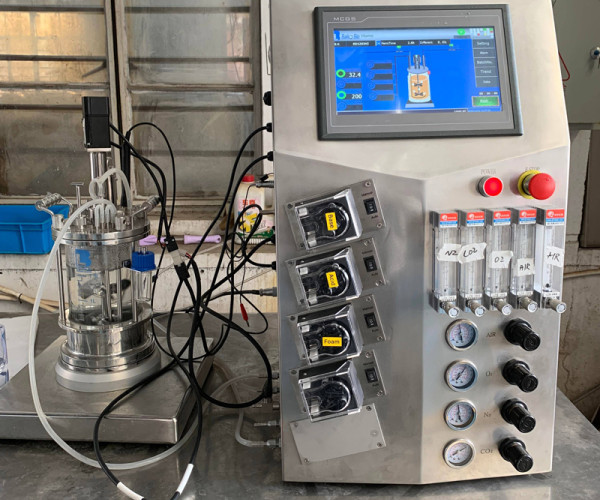
Can one bad batch cost you months of work? Yes. I have over 8 years of experience as an employee in the Bioprocessing Equipment industry. I have seen reputable companies lose a batch because of equipment selection mistakes. In this article, we'll define what GMP equipment is, establish the criteria for qualifying it, talk about the importance of logs, and help you find a reliable supplier for your facility. GMP stands for Good Manufacturing Practices. The regulations are in place to keep biologics and drugs safe. For any major bioprocessing equipment manufacturer, GMP compliance is an absolute must. GMP machinery must always be fully traceable, easy to test and easy to clean. The bioprocess engineering system comprises all from bioreactors to filters. All components should comply with the specifications for bioprocessing machinery. For single use bioprocessing equipment, a safe polymer or 316L stainless steel is often the material of choice. Each component must be accompanied by documentation and the product must be handled with care. Quality alone is not enough. Above all, the safety of the patient must be the concern. Equipment Type GMP Requirements Key Standard Application Your equipment is qualified by demonstrating it works correctly. Regulators need to have it to use your batch data- this is necessary. First, is IQ and it checks the installation. Then OQ. Finally PQ. The OQ (Operating Quality) is performed to check the functionality. PQ proves its performance with a real product. When you design your own bioprocessing equipment you need to consider certifying it as you design it, not afterwards. If you skip this step you will often get a warning letter from the FDA to the company. There are clear tasks at each stage, processes for proof and sign-off: IQ (Installation Qualification): Compares the end product to the approved blueprints and components. OQ (Operational Qualification): Operational qualification means running the equipment at low, medium and high settings to ensure it is within the specified range. PQ (Performance Qualification): Confirms that the equipment consistently produces the same result when using an actual product. Re-qualification: Any change that can influence the quality of the product needs to be re-qualified. Document Stage Who Approves Regulatory Link The design of day one equipment must be GMP compliant. All supplier documentation to be finalized before installation including FAT and SAT reports. Calibration records should be current for all instruments. Change control must be invoked before any changes can be made after qualification. Prioritize using the risk-based strategy of ICH Q9. An audit trail is a secure, time-stamped record of every system operation. It is not an option in GMP work, it is the law. Bioprocess equipment with electronic records must have a full audit trail in compliance with EU GMP Annexe 11 and 21 CFR Part 11 of the FDA. Keeps track of all alarms, changes, logos. If a batch fails, the audit trail will identify who was responsible and what went wrong. Without this you cannot protect your data. In electropolishing bioprocessing equipment, many organizations tend to focus more on surface smoothness than on keeping a record of the data. Feature Paper Log Electronic Audit Trail GMP Preference Automated audit trails cut down on errors. Quicker turnaround times. They are the obvious choice of GMP for today's biopharma. Paper logs are still permitted in some places, but demand rigid controls and are more difficult to justify. Time/date/operator id associated with each system action Old value & New value for each setting change Basis for change where necessary according to 21 CFR Part 11 Alarm events: when they were triggered, who saw them and when they were fixed System access logs (login/logout/failed attempts) Batch record relationships: relating what runs on a machine to what lot of goods Biopharmaceuticals (mAbs, vaccines): There must be a link between each stage and a batch record at patient level. Cell and Gene Therapy: Complete data from culture to final fill required for small, high value batches. Contract Manufacturing (CDMO): Data needs to be fully segregated and tracked on a per customer basis, Case studies are where theory gets put into practice. Bioprocessing Equipment for Biopharma Keeps Production on Track in Vaccine Plants, Cell Therapy Labs and Purification Suites In each case, the right choice of equipment-its surface, material and data tools-decided whether batches passed GMP review. Companies with custom bioprocessing devices with 21 CFR Part 11 tools built in had fewer errors and faster approvals. Sector Equipment Used GMP Challenge Solved Outcome Electropolishing improves the surface by decreasing the potential for biofilm and cleaning load. For single-use systems that prevent cross-contamination, validated E&L data is a must. Skid-mounted, modular designs help speed testing and installation. Built-in audit tools of SCADA or DCS reduce the manual entry errors. Supplier IQ/OQ/PQ support can reduce your internal qualifying effort by as much as 40%. Material selection is not only a matter of technology. This one is totally legal. What can safely touch your product is dictated by the regulations regarding acceptable materials to use in bioprocessing tool. Using the wrong metal or plastic can contaminate your biologic, not sterilise, or corrode within a batch. The most frequent is the ASME BPE standard. It includes trace materials, weld quality and surface finish. The most important tests for plastics used in single-use bioprocess equipment are Usp Class VI and ISO 10993. 316L stainless steel is great for long term machinery. Electropolishing bioprocessing equipment to Ra < 0.5 µm could provide the smoothest and safest surface. Standard Applies To Key Requirement Why It Matters Ask your supplier for material test reports (MTRs) and certificates of conformance. Electropolished surfaces are longer lasting and cleaner better than mechanically polished ones. Always ask for complete extractables and leachables (E&L) data for single-use parts. Don't forget gaskets and seals- these must also be USP or FDA food-contact grade Electropolishing strips the metal of its protective oxide layer, leaving an extremely smooth and shiny surface. This can be used on GMP equipment to decrease biofilm. It is easy to clean. Validation of CIP/SIP cycles is useful. ASME BPE recommends electropolishing as the preferred method for stainless steel equipment product-contact surfaces. Electropolishing may be used to meet the GMP criterion for surface finish, Ra ≤ 0.5 mm. It has improved corrosion resistance over mechanical polishing. Electropolished surfaces are easier to validate and keep clean in GMP applications. If a piece of single-use bioprocess equipment passes the tests for USP Class VI or ISO 10993, it is GMP compliant. Full extractables and leachables data are required. All components shall have a traceable lot. The provider should provide a way to get notified of changes and a guide to validation. All polymers in contact with this product shall have biocompatibility test data. There must be data on the worst case procedure as to duration, pH and temperature in E&L. Each single-use component must be associated with a specific GMP batch by lot traceability. Every single warning, change, and system action is logged in an audit trail. Cannot be edited. This is required by both the FDA (21 CFR Part 11) and the EU (Annexe 11)- you cannot have an electronic system used for GMP work without this. “It protects your data and allows you to find and fix problems quickly. Every change must log the previous value, current value, operator ID, and time. Audit trails must be backed-up and secured to prevent tampering. Whenever the FDA or EMA inspectors come, they look at the audit trails. When standard bioprocessing equipment doesn't fit the bill, it's time for a custom solution. In new biologics, cell therapies, it is common. From day one of the design process, qualification is built into a reliable bespoke supplier. This makes installation and testing cheaper and easier. You need a custom design when standard vessels do not fit your process. It is very common in cell therapy, where closed, patient-specific systems are needed. A good vendor will provide URS, design specs and IQ/OQ docs. GMP production quality is a relative. Often the link is hidden under an uncertified ship, no audit trail, or a surface that fails cleaning inspections. Selection of bioprocess equipment should be done in cooperation with an engineering expert familiar with Good Manufacturing Practices (GMP) standards. Bailun Biotech of Jiangsu is a name to reckon with when it comes to GMP compliant, ready-to-use bioprocessing equipment for the biopharma business. They are specialists in the field of facilities, equipment and systems for bioprocess engineering.What Is GMP-Compliant Bioprocessing Equipment?
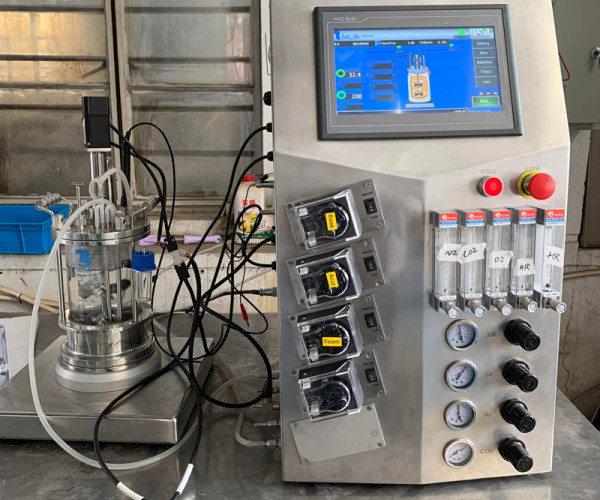
GMP Bioprocess Equipment: Core Technical Overview
How Does Qualification Work for Bioprocess Equipment?
IQ / OQ / PQ: What Each Stage Covers
Qualification Documentation Table
Key Factors That Affect Qualification Success
Why Are Audit Trails Essential in GMP Equipment Logs?
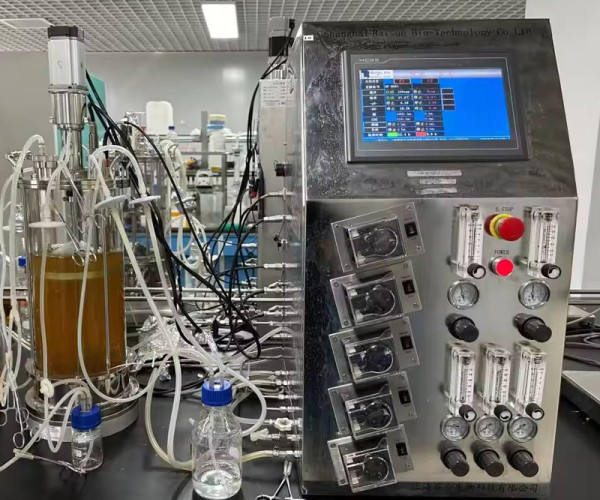
Paper vs. Electronic Audit Trails: A Direct Comparison
What Must an Audit Trail Capture?
Sectors That Rely Most on Equipment Audit Trails
Which Real-World Examples Show GMP Equipment in Action?
Case Study: GMP Equipment Across Biopharma Sectors
What These Cases Teach Us About Equipment Selection
What Material Standards Must Bioprocessing Equipment Meet?
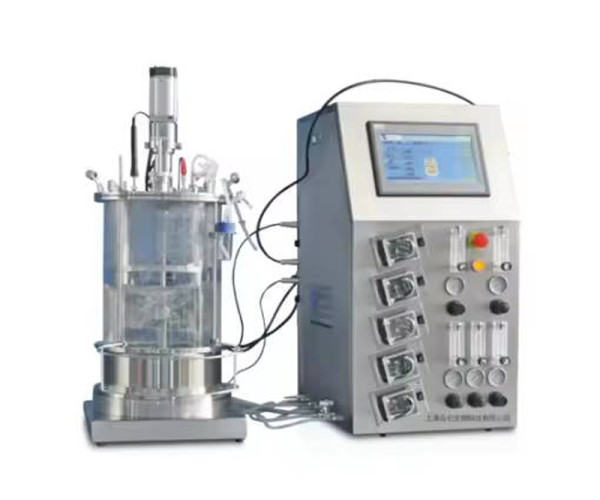
Common Material Standards in Bioprocessing
Key Tips When Selecting Equipment Materials
Frequently Asked Questions
Why Is Electropolishing Needed on Bioprocessing Equipment Surfaces?
How do you know single-use bioprocess equipment is GMP compliant?
How can an Audit Trail help Biopharma stay compliant with GMP regulations?
How Do You Know When to Design Custom Bioprocessing Equipment?
Conclusion