Which Glass Fermenter Is Best For Lab Setup? Batch Volume, Pressure Rating, Jacket Type
- Share
- Issue Time
- Jun 6,2026
Summary
Every batch depends on the vessel you choose. How do you choose the right one? I have been working with glass fermenters in the bioprocess and fermentation industry for 7 years and have had the chance to test and evaluate many kinds of vessels in pilot and production settings.
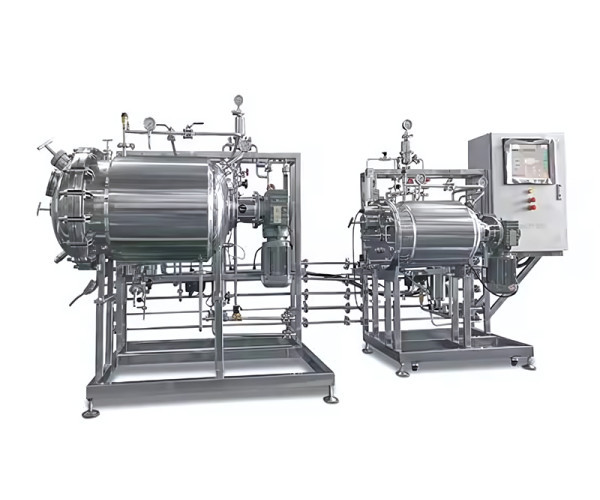
Every batch depends on the vessel you choose. How do you choose the right one? I have been working with glass fermenters in the bioprocess and fermentation industry for 7 years and have had the chance to test and evaluate many kinds of vessels in pilot and production settings.
In this article I will describe the glass fermenter and its main features. We will discuss which fermenter is the best pick for the lab setup. Also, there will be information about batch volume, pressure rating and jacket type.
What Is a Glass Fermenter and Why Does It Matter in Labs?
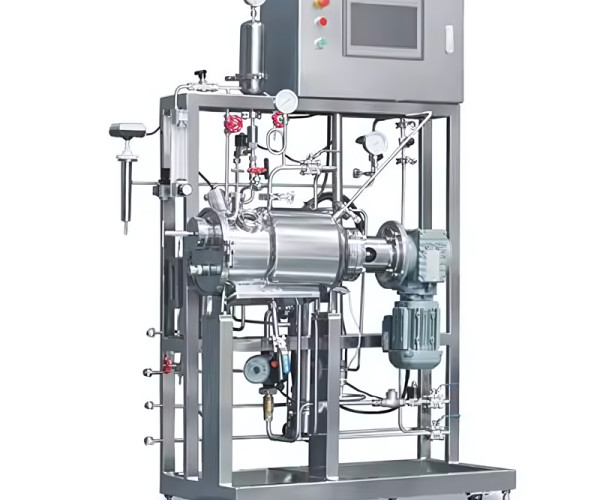
Scientists use glass fermenters to grow cells or microbes in a controlled environment. Borosilicate glass is heat and chemical resistant due to its composition. It is used in the laboratory for studies of fermentation, cell culture and enzyme production. You can see the internal procedure clearly. makes harvesting a snap after every run.
Key Technical Specs of Lab-Grade Glass Fermenters
Specification | Standard Range | Importance | Lab Impact |
|---|---|---|---|
How Does Batch Volume Affect Your Glass Fermenter Choice?
Ensure that the glass fermentation jar you buy is large enough for the size of your batch. A smaller amount is sufficient for screening runs. Greater volume makes for better work on process development. Using a container that is too big results in poor mixing and media waste. Picking too small will not give enough yield for analysis. prevents the escape of gas and froth.
Working Volume Tiers for Different Lab Scales
Each laboratory scale has a different volume range. Data quality and no waste: matching tiers.
Lab Scale | Working Volume | Vessel Size (Total) | Typical Use Case |
|---|---|---|---|
Key Factors When Selecting Batch Volume
Change the daily amount of work you do according to the number of samples you have to produce.
The container you choose should allow bubbles to rise above the liquid level.
If you have many runs going at once, use smaller glass fermentation jars.
Larger arteries increase the shear stress on susceptible cell types.
Comparing Small vs Large Volume Glass Vessels
Factor | Small Volume (0.5–2 L) | Large Volume (10–20 L) |
|---|---|---|
Small containers are good for pre-studies. It works well for scale-up operations when done in larger vessels. Glass fermentation weights can be used to stabilize both in the bench configuration.
Why Does Pressure Rating Define Your Fermentation Process Safety?
In a glass fermenter, aeration and gas sparging lead to a buildup of pressure. If the pressure rating is low, reduce the aeration rate. More flexibility in process design with a higher grade. Lab glass fermentation clamps and weights should be rated for the vessel. Overpressure that can break glass may cause injuries to research personnel. Ensure that the ship, its seals and its ports are always rated the same level. The usual rating for borosilicate research vessels is from one-half bar to three bar. Some modern units will go to 6 bar on aerobic runs with high cell density. Ask your provider about both the burst pressure and the operating pressure.
Advantages and Disadvantages of High Pressure Ratings
Benefit: Raises the amount of dissolved oxygen for rapid cell development
Benefit: Helps to remove CO2 in very dense culture runs.
Disadvantage: Requires more expensive and durable seals and fittings.
Disadvantage: Thick walled glass is heavier and not so portable.
Pressure Rating: Standard vs High-Pressure Vessels
Pressure Range | Application Type | Risk Level | Seal Material |
|---|---|---|---|
Standard containers are required by about 90% of labs. They do well for some aerobic runs with dense cell loads. High pressure units.
Which Jacket Type Best Controls Temperature in Glass Fermenters?
It is important to keep the temperature steady when fermenting. The fermentation jar is in a jacket through which heating or cooling fluids are circulated. One is more simple and less expensive. With a double jacket, you have more control and efficiency. Electric heating mantles are also used in some laboratories as an additional option. You can heat or cool the vessel faster or slower depending on the jacket you use. double-wall jacket. Usually, one jacket is enough for general bacteria cultivation.
Advantages and Disadvantages by Jacket Type
Single wall: Low cost, easy to clean and suitable for most common process cycles.
Double wall: For optimal temperature consistency for sensitive cell lines.
Electric mantle: it is suitable for independent installation and does not require water piping.
Cryogenic jacket: Enzymes and proteins need a cryogenic jacket for cold processing.
All main jacket types are available in the range of glass cone fermenters from Bailun Biotech (Jiangsu). They provide full custom support and build their containers to pharma-grade specifications.
Frequently Asked Questions
What should be the working volume of a new laboratory setup?
For most new laboratories, a 2–5 liter glass fermenter is the best. It provides a large amount of data for analysis at a low cost of media.
It fits comfortably on standard lab benches without any additional support.
Allows two or three units to run in parallel simultaneously.
Easy to autoclave and clean up after each run.
Are glass fermentation weights absolutely necessary to keep the tank stable?
Using a glass fermentation weight or something similar will help to keep the vessel steady while you churn the contents. You won't get any tipping or vibration when using them for long runs.
Use this to secure lids and seals on open top configurations.
Important for stirring at high RPMs (500 RPM or more)
It is also used in anaerobic jars to maintain a gas-tight head space.
Which is the best material for a conical glass fermenter?
All glass conical fermenters should be made from borosilicate 3.3 glass. It does not react up to 500 C and is resistant to strong acids and bases.
Does not elute any compounds into medium for cell growth.
Complete visibility on the visual process monitoring.
You can easily check for scratches and other damage before each run.
Can you use pressured runs in glass fermentation jars?
Yeah. Depending on the design, high-grade glass fermenting jars can withstand pressure up to three bars. Working pressure specs should be reviewed periodically with the manufacturer.
For high pressure environments, PTFE or Viton seals are recommended.
Do not press more than the rated amount to prevent breaking glass.
All pressurized systems shall be provided with a pressure relief valve.
What is the difference between a bioreactor and a glass fermentation jar?
Batch and fed-batch processes are most easily performed in simple vessels such as glass fermentation jars. A bioreactor is fully automated with additional sensors and wider control loops.
Fermentation jars are cheaper and more convenient.
Bioreactors are suitable for complex fed-batch and perfusion cultures.
Either of them will do any kind of jacket or seal.
Conclusion
Three important things to consider when choosing a glass fermenter are batch size, pressure rating and jacket type. Make sure the volume is the same as lab scale. Select a pressure rating according to your aeration requirements. Choose a coat that will help regulate your body temperature. A good glass conical fermenter will be durable and dependable. Glass fermentation weights provide greater safety and stability of operation.
If you want reliability, customizability and pharmaceutical-grade build quality then Bailun Biotech (Jiangsu) is the best option for labs. They provide complete fermenter systems with glass jars, covers, seals and control units. You and their staff will select the vessel that best suits your process standards.