Which Stainless Steel Lab Fermenter Size Fits You? 5L, 10L, 50L?
- Share
- Issue Time
- Sep 29,2026
Summary
A stainless steel lab bioreactor is the better choice if you want to kill germs inside the tank itself. You never have to move it into an autoclave, which is a steam oven for lab tools. The tank is built for 0.3 MPa, so it can also run under pressure
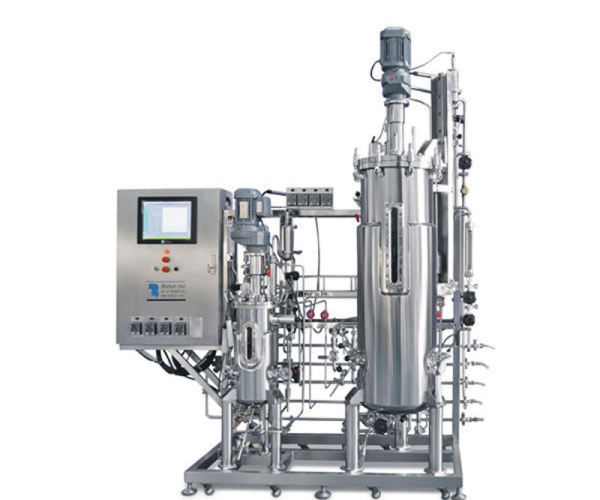
Should you buy a 5L, 10L or 50L tank? First, think about how much liquid you need for each run. Do not pick by the size on the tank.
Many teams buy a stainless steel lab fermenter by its full size. Then they get too little liquid to test, or pay for too much media. Bailun Biotech lists a safe fill of 30% to 70% of the tank. This is called the working volume. It helps you pick the right size.
This looks guide at each size, the features all sizes share and a short checklist. It is for labs that do research, process work or quality checks. We use Bailun's SS316 5L to 50L lab fermenter range as the example.
What Does a Stainless Steel Lab Fermenter Do?
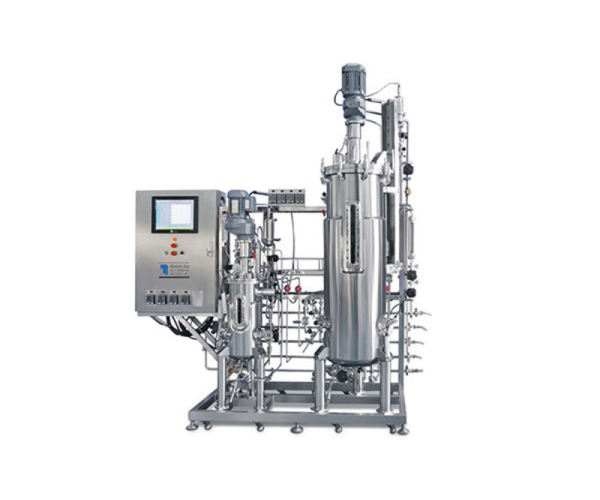
A stainless steel lab fermenter is a steel tank where cells grow. It keeps pH, oxygen, temperature, air and food at the right levels. The oxygen in the liquid is called dissolved oxygen, or DO. Warm or cool water flows around the tank to set the temperature. A stirrer keeps everything well mixed.
A laboratory stainless steel fermenter can grow many kinds of cells. You can see them in the table below.
Key Facts at a Glance
Feature | What Bailun Lists |
|---|---|
Sizing at a Glance: 5L vs 10L vs 50L
The best 5L to 50L lab fermenter is the one that holds the right amount of liquid for your run. The numbers below use Bailun's 30% to 70% fill rule.
Working Volume by Tank Size
Total Volume | Working Volume | Lid Lift System | Typical Lab Stage |
|---|---|---|---|
The last column is a general guide. It does not come from Bailun.
Why Working Volume Matters More Than Tank Size
Working volume is how much liquid a tank can safely hold in a run. In a stainless steel lab fermenter, the empty space at the top is for foam and gas. If you fill the tank too high, foam can rise into the gas outlet.
Filling too low is also a problem. The paddles and probes may stick out of the liquid. Bailun uses three six-blade paddles, and you can move them up or down. The probes must stay in the liquid to give true readings.
Bailun's tanks are tall. The width-to-height ratio is 1:2.2 to 2.5. A tall tank gives air bubbles a longer way to travel through the liquid.
When Is a 5L Fermenter the Smart Start?
A 5L tank is a good first choice for testing strains and new media. Each run uses only 1.5 to 3.5 L of liquid. So if a test fails, you lose very little media. Bailun's SS316 laboratory bio fermenter starts at 5L.
A microbial fermenter for laboratory tests at this size still controls pH, DO and temperature. But Bailun does not list a lift lid for the 5L size. You will need to lift the lid by hand.
Where a 10L Vessel Earns Its Bench Space
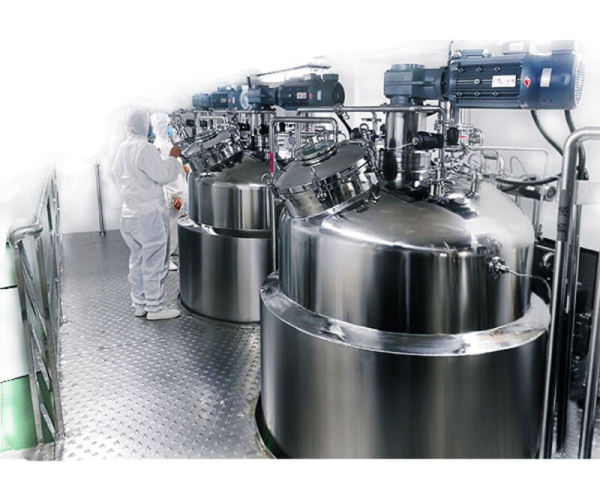
A 10L stainless steel lab fermenter is a good fit if you need to take many samples. It also works well for fed-batch runs, where you add food during the run. It 3 to 7 L of liquid. So you can take samples all day and still have plenty holds left. Pumps add food and anti-foam liquid by themselves.
Do you need a lab scale stirred tank fermenter for longer runs? Start with 10L. Bailun's continuous stirred lab bioreactor starts at 10L.
Is 50L the Right Step Before Pilot Scale?
A 50L lab scale stirred tank fermenter is the right step when you are ready to grow bigger. It is good for seed culture, which is the starter batch for a larger tank. It 15 to 35 L of liquid. This size also has a lid lift, which holds Bailun lists for 30L to 500L. The lift makes cleaning easier.
Bailun also makes 100L, 200L, 500L, 1000L and larger tanks. All these sizes use the same spec sheet. So a process that starts in a stainless steel lab fermenter can move up to a bigger tank of the same kind.
Specs That Stay the Same Across Every Size
Bailun builds every lab scale stirred tank fermenter in this range the same way. Only the size and the lid lift are different.
Vessel Build: SS316, Polish and Pressure
The tank and its outer jacket are made of SS316 and SS304 steel. The tank is built for 0.3 MPa of pressure. The jacket is built for 0.35 MPa. The inside is polished smooth, to 0.4 to 0.6 µm. A smooth surface is easier to clean.
Control Loops for pH, DO and Temperature
pH: 2.00 to 12.00. Pumps add acid or base by themselves. On the SS316 bio fermenter, pH is accurate to ±0.05. On the continuous stirred model, it is accurate to ±0.02.
DO: 0 to 150%, accurate to ±3%. The screen shows it to 0.1%. The system adjusts stirring and oxygen to keep DO on target.
Probes: pH and DO probes come from Hamilton or Mettler, Switzerland.
Temperature: from 5 °C above the cooling water up to 70 °C.
Controls: a 10-inch touch screen run by a Siemens PLC. It saves your data. It also sounds an alarm when a value goes too high or too low.
Mixing, Sterilization and Clean-in-Place
Function | Specification |
|---|---|
An air flow of 1 vvm means the tank gets as much air each minute as the liquid inside it. For example, 10 L of liquid gets 10 L of air per minute. You can also add extras, such as O2, N2 and CO2 gas control. Extra sensors for level, OD, turbidity, ORP, weight and live cells are also available.
Stainless Steel or Glass for Your Lab Work?
A stainless steel lab bioreactor is the better choice if you want to kill germs inside the tank itself. You never have to move it into an autoclave, which is a steam oven for lab tools. The tank is built for 0.3 MPa, so it can also run under pressure.
Glass is a better pick than a stainless steel lab fermenter if you want to see the cells grow. It also works well if your lab uses a small autoclave on the bench. To learn more, read Bailun's guide to choosing a glass lab fermenter . It covers batch size, pressure rating and jacket type.
Four Questions to Settle Before You Order
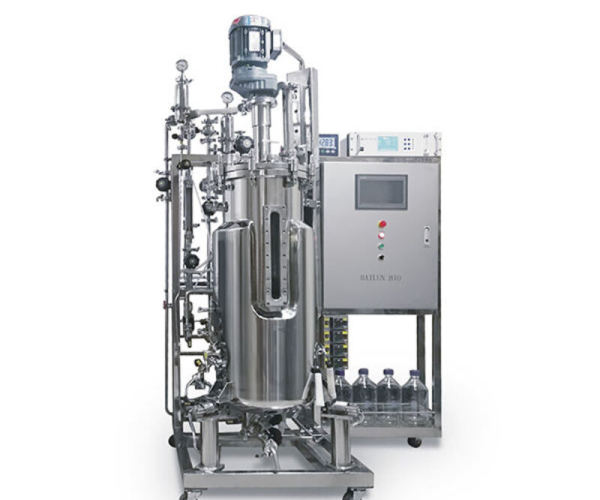
Before you buy a laboratory stainless steel fermenter, answer these four questions.
Pre-Order Checklist
Bacteria or cells? Will you grow bacteria in a microbial fermenter for laboratory use? Or will you grow cells? Bailun's quote form asks this question.
How much liquid per run? Choose a tank that can hold the liquid you need, using the 30% to 70% rule.
Which drive? Pick a mechanical drive on the top or bottom, or a magnetic drive on the top.
Which extra sensors? Decide early if you need extras, such as OD, ORP or live cell sensors.
Bailun plans each system from a URS, or User Requirement Specification. This is a document that lists what your process needs. Don't have one? Bailun's team can send you a blank form to fill in.
Choosing a Lab Fermenter Manufacturer in China
Factory Scale and Focus
Bailun says it has factories in Shanghai and Lianyungang. The Shanghai sites are in Jiading and Songjiang. The Lianyungang sites are in Haizhou and Ganyu. Bailun lists 500 staff and says it serves 86 nations .
Bailun says it makes its own tanks and is not a trading company. Its main work is for the drug-making and bio-engineering fields.
Certificates and Quality Checks
Every laboratory stainless steel fermenter comes with a test report for the machine. Bailun also sends a video of the final check before the tank ships.
Bailun's certificate page shows ISO 9001, ASME and CE. It also shows a pressure vessel production license and a special equipment production certificate. You can see the ASME and ISO 9001 certificates online.
Custom Builds and After-Sales Support
Minimum order of 1 unit
OEM and custom builds accepted
Overseas installation and operator training
Remote or on-site maintenance
Free replacement if goods are damaged in transit
FAQs
How Much Liquid Does a 10L Fermenter Hold?
A 10L stainless steel lab fermenter holds 3 to 7 L of liquid. That is 30% to 70% of its full size.
Fill it close to 7 L if you want to take many samples.
Keep it above 3 L so the probes stay under the liquid.
Can One Vessel Run Both Bacteria and Cell Work?
Yes, one tank can do both. Bailun lists bacteria and cell growth as uses. Ask the sales team to check the right setup for you.
A microbial fermenter for laboratory work often needs fast stirring.
Cells usually need slow, gentle mixing.
Does a Small Fermenter Need a Lid Lift?
No, Bailun does not list a lid lift for small tanks. The lid lift is only listed for 30L to 500L.
The 5L and 10L sizes have no lid lift.
There is one 50L size.
How Is a Stainless Steel Lab Bioreactor Sterilized and Cleaned?
A stainless steel lab bioreactor from Bailun kills germs inside the tank with a set program. This is called SIP. It is cleaned inside with a spray ball, which is called CIP. You do not need to take the tank apart.
The sample valve and the harvest valve can be cleaned of germs on their own.
The bottom valve has no dead spots where liquid can sit.
What Warranty and Order Terms Apply?
The warranty is 1 year, and it covers the main parts. You can order just 1 unit.
Each tank comes with a test report and a check video.
You can pay by L/C, D/A, D/P or Western Union.
Which Size Should a New Lab Buy First?
Buy the size that fits your biggest planned run. If you only test strains, 5L is a good start. If you plan to add food during runs or take many samples, 10L may suit you better.
Write down your run sizes before you compare the 5L to 50L lab fermenter options.
Leave room to move up to 50L later.
Conclusion
Pick the size by how much liquid you need, not by the size on the label. Use 5L for testing strains. Use 10L for repeat runs and fed-batch work. Use 50L for seed culture and growing bigger.
Bailun Biotech (Jiangsu) Co., Ltd. is a lab fermenter manufacturer in China with its own factories. It builds every stainless steel lab fermenter in this range the same way. This makes it easier to move up to a bigger tank later. Tell Bailun what you want to grow and how much liquid you need. Then request a sizing quote .