Core contradictions, common methods, and practical suggestions for pilot scale amplification
- Share
- Issue Time
- Dec 1,2025
Summary
As the volume of the device increases, nonlinear changes occur in the physical field, transmission process, and cellular microenvironment.
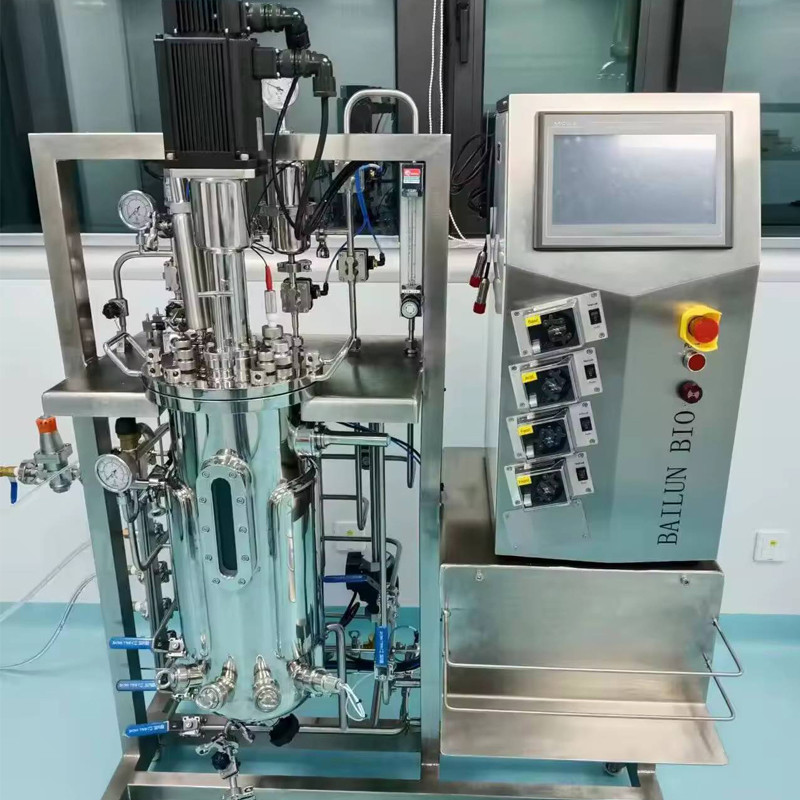

When the cell culture system from a 200L small test tank is proportionally transferred to a 2000L pilot tank, fluctuations in yield, metabolic disorders, and cell apoptosis are often not simply operational errors.
Behind these phenomena are systemic challenges caused by scale effects.
1、 The core contradiction of the amplification process is that traditional amplification thinking often assumes that the parameters of the large tank are multiples of the small tank, but ignores the qualitative changes in system properties caused by volume growth.
From the perspective of engineering thermodynamics and biological process engineering, there are three main contradictions in amplifying the core:
1. Different oxygen transfer efficiencies (kLa) are influenced by multiple factors such as ventilation rate, stirring shear force, and tank geometry.
2. The full mixed flow in small tanks with different flow field distributions is difficult to maintain at a scale of 2000L, and the mixing blind zone leads to the occurrence of dead zones.
When the shear force gradient difference widens, the risk of cell breakage increases and the probability of protein aggregation increases.
3. The spatial limitations of different pH probes in the microenvironment lead to blind spots in detection, and the accumulation of CO ₂ can cause intracellular acidosis and inhibit antibody synthesis.
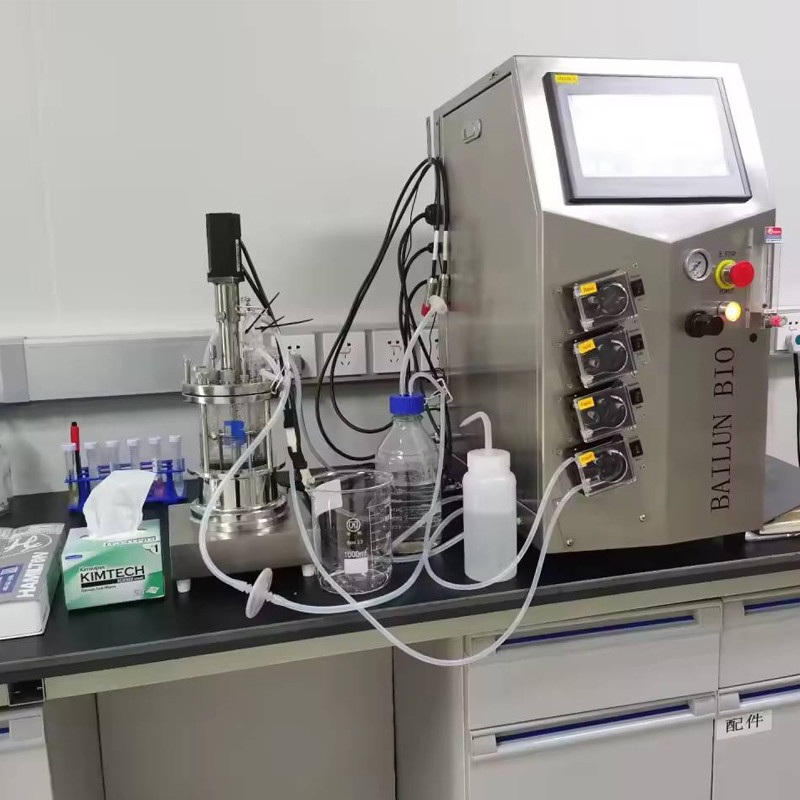
These 'invisible variables' have become key factors in production fluctuations.
2、 The commonly used amplification methods at present
At present, the "multi-scale coupling+digital twin" method is commonly used to reduce amplification risks through laboratory modeling, pilot testing, and production optimization.
The specific implementation can be divided into three stages:
1. Trial stage: Build a predictive model • Screen key process parameters (CPPs) through DOE • Measure kLa using dynamic dissolved oxygen method and draw the "kLa scale" curve • Use a scaled model to simulate the flow field distribution and optimize the design of the stirring blade
2. Pilot stage: Digital twin verification • Real time monitoring of Raman spectroscopy, near-infrared and other data • CFD simulation reveals flow field distribution characteristics • Comparison of virtual models and measured data, calibration of parameters
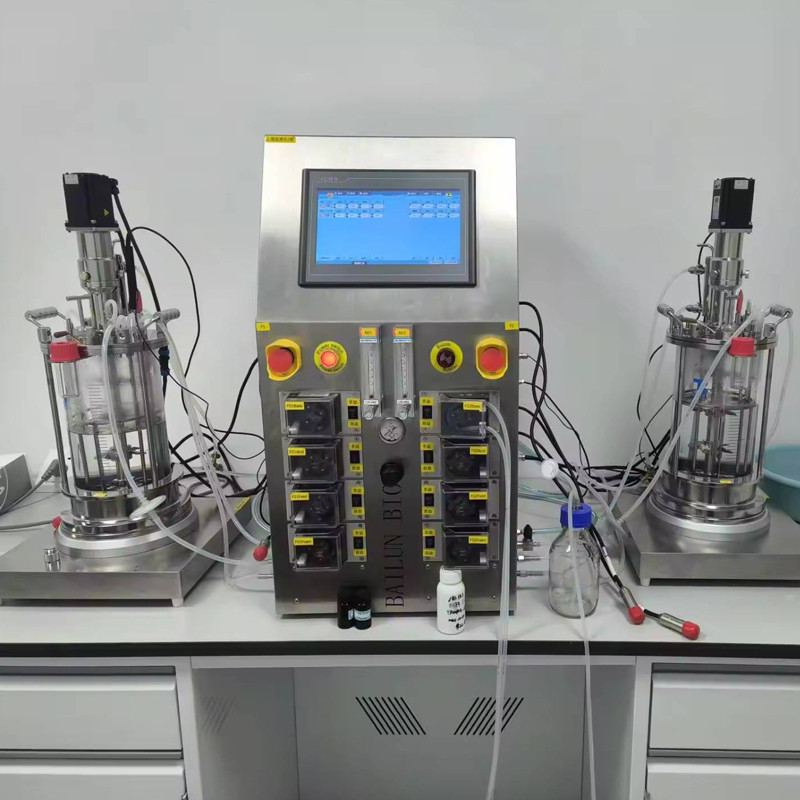
3. Production stage: Continuous process validation • Monitoring indirect indicators such as cell apoptosis rate and glycosylation modification • Updating the knowledge base iteratively to support larger scale production
3、 In the trial stage, it is recommended to include scalability evaluation and prioritize the determination of core parameters such as kLa, mixing time, and shear force.
Before the pilot test, it is possible to consider using CFD to construct a flow field model, with a focus on the dead zone ratio and shear force distribution.
Finally, gradually establish a scale effect database to record the parameter variation patterns at different scales.
Bailun Biotechnology has been deeply cultivating bioreactor equipment and core components for a long time. The company has accumulated profound technical experience in optimizing mass transfer efficiency and designing component structures.
Through independent research and development, multiple core technology patents have been formed, and bioreactor related components have been widely used in fields such as biomedicine and microbial fermentation.