"40% of the fermentation broth was spilled" when the tank was being placed? Don't laugh, this can really happen
- Share
- Issue Time
- Jan 6,2026
Summary
"40% of the fermentation broth was spilled" when the tank was being placed? Don't laugh, this can really happen
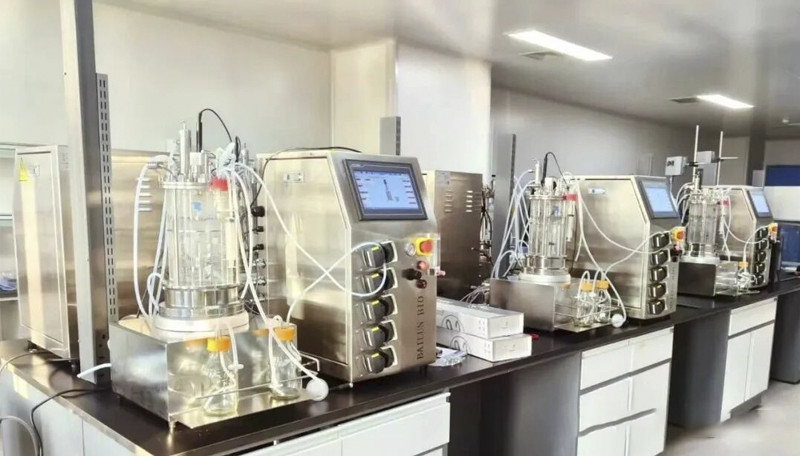

A few days ago, while flipping through my old notes, I came across a record I had written earlier: "Improper canning operation resulted in the fermentation broth running away for most of it
At that time, there was no accompanying picture, but the scene is still vividly remembered - the people in the control room were sweating profusely, the cans were still bubbling, and the exhaust pipe was spewing out fermentation liquid, as if champagne had been opened.
Unfortunately, this is not a celebration, it's the heart bleeding.
That can, with a scale of 10 tons, has a high expression level that is eye-catching, the bacteria grow well, and all the indicators meet the standards, except for the final step of entering the centrifuge.
As a result, the canning operation panicked and the product "escaped" directly from the exhaust port.
Ten days of hard work evaporated almost half in an instant.
Putting the can is not about "shutting down", but about "putting the knife into the sheath". Many people think that when the fermentation reaches the end point, stopping the mixing, turning off the replenishment, and cooling down is enough, and the rest is just opening the valve to release the material.
Actually, it's completely wrong.
The fermentation tank before being put into the tank is in a critical state of "high pressure and high speed": the liquid content often exceeds 80%, and the foam almost reaches the top of the tank;
Mixing at full speed and maximum ventilation (e.g. 2VVM); The tank pressure may be adjusted to 0.6~1.0 bar to maintain dissolved oxygen; The fermentation broth is thick and sticky, and the proteins and nucleic acids released by the autolysis of bacterial cells are like natural foaming agents.
At this point, the entire system is like a heavy-duty truck traveling at high speed - you can't brake suddenly with one foot, you have to slow down and steer slowly in advance.
But that day, the operator dropped the intake and pressure too much in order to finish quickly.
As soon as the pressure drops, the gas dissolved in the liquid will flash into bubbles, and the foam will expand instantly, and the liquid level will directly rush to the exhaust port.
Why is it easier to 'explode' when cooling down?
Some people are puzzled: Isn't cooling down making the system more stable?
On the contrary. At the later stage of fermentation, the temperature drops, the viscosity rises, and the surfactant is more stable. In addition, the cell splits to release the contents, so the foam is not only large, but also "firm" and not easy to break.
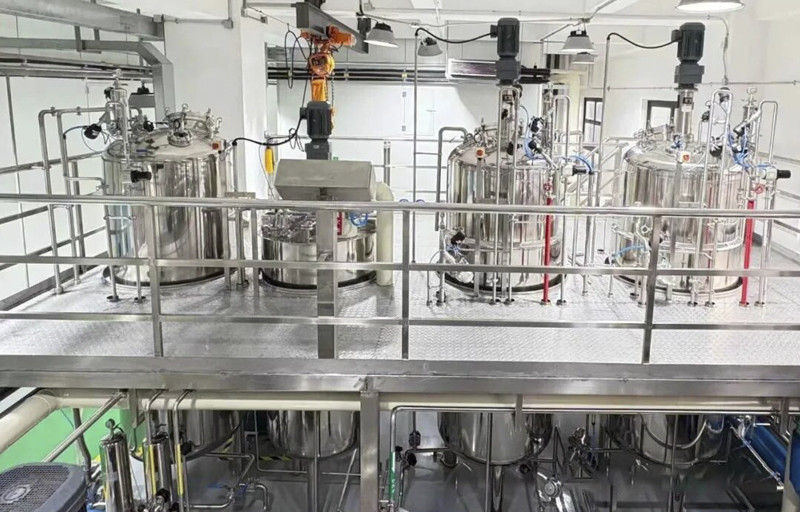
At this time, if the pressure is released quickly, it is equivalent to adding a booster to the foam - the lower the pressure, the stronger the gas expansion, and the higher the foam climbs.
Even more dangerous is the vicious cycle:
Foam blocks exhaust → back pressure drops → more gas escapes → foam is higher → more liquid escapes
By the time you react, a section of the can is already empty.
How did we change it later? A fall into a ditch makes you wiser. After that, the team established several iron rules:
Before placing the can, a "soft landing" is required:
The ventilation rate, stirring, and pressure should all be slowly reduced in stages, with at least 10 minutes of buffer time reserved. Only adjust one small step at a time, and move to the next step after the foam has stabilized.
Better manual than reckless:
Automatic control sometimes lags behind in response, and manual control is switched at critical moments. It is better to slow down than to let the parameters "plummet".
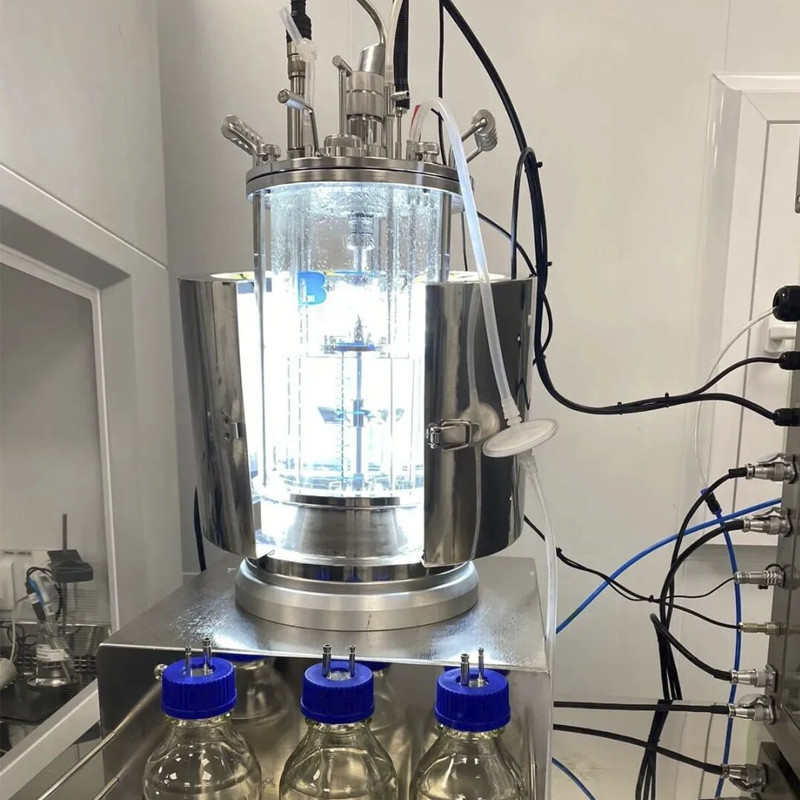
Double check, closely monitor on site:
Two persons must be on duty when placing the tank, one shall operate and the other shall keep an eye on the liquid level and foam height. If any abnormalities are found, immediately shut off the intake and exhaust.
Be more careful with exhaust filters:
On the surface, there is no "liquid leakage", but once the filter element is blocked by foam, the pressure in the tank may soar instantly, and the bursting disc cannot bear it. So it is best to equip large tanks with dual filtration or emergency bypass.
Don't think that intelligent systems can provide a safety net
Nowadays, DCS is becoming smarter and more logical, but as long as the process itself is prone to foaming, has a large liquid volume, and high aerobic strength, risks will always exist.
No matter how advanced the technology is, it cannot replace the understanding and reverence for the process.
Placing cans is not the end, it is the last line of defense.
Being stable is the true skill.