The weld seam cannot be pressed on the bracket? This is not nitpicking, but a safety bottom line
- Share
- Issue Time
- Jan 7,2026
Summary
Recently, a colleague roasted: During an on-site inspection, the expert pointed out that the weld seam of a certain pipeline was located right below the support and hanger, and requested rectification. Many people were wondering, "How could the weld seam be in the wrong position? Isn't this too nitpicking?"
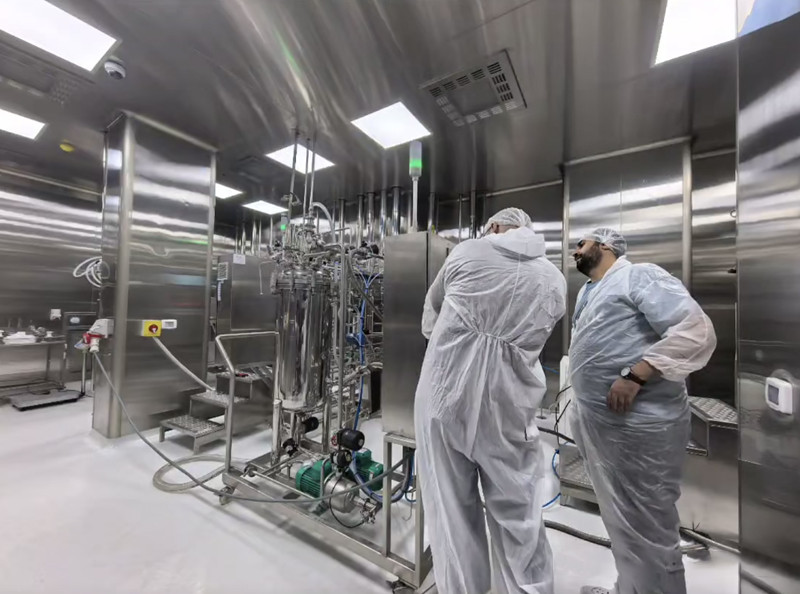

Recently, there was a peer roast: during an on-site inspection, experts pointed out that the weld of a certain section of pipe fell just below the supports and hangers, requiring rectification. Many people are muttering to themselves, "Is the position of the weld seam still correct? Is it too serious
At first glance, it does sound a bit like picking a bone in an egg - the pipes are all welded and slightly off center, right?
But if you flip through the regulations, you will know that this matter cannot be taken lightly.
What do you say about standards? Article 7.2.6 of the Construction Code for On site Equipment and Industrial Pipeline Welding Engineering (GB 50236-2011) clearly states:
The distance between the welding seam of the pipeline docking ring and the edge of the support and hanger should not be less than 50mm;
If the weld requires heat treatment, the distance shall not be less than 5 times the width of the weld and shall be at least 100mm.
Similar clauses are also explicitly required in the "Construction Code for Industrial Metal Pipeline Engineering" (GB 50235-2010) and the latest "Pressure Pipeline Code for Industrial Pipelines" (GB/T 20801.1-2025).
Although the wording is slightly softened, the core principle remains unchanged: welds should avoid overhead hangers.
These are not the "ideal state" when the design institute draws, but the mandatory regulations that must be followed during construction.
Why is it so particular?
The truth is actually very practical:
High risk of stress accumulation
The support and hanger are critical parts of the pipeline that are subjected to stress, and there is inherent stress concentration.
Due to the influence of welding heat, the microstructure of the weld area is uneven, and the strength is slightly lower than that of the base metal. If the two overlap, it is equivalent to "weakness+high load", which is prone to cracking under long-term operation.
Maintenance and heat treatment are restricted
If the weld seam is pressed by the support, subsequent non-destructive testing (such as radiation or ultrasound) will be obstructed, and the heat treatment will also be difficult to uniformly heat, which may pose hidden dangers.
Equally sensitive near bends
The specification also emphasizes that the weld seam should not be too close to the starting point of the bent pipe (≥ pipe outer diameter and ≥ 100mm).
Because the fluid impact and structural stress at the bend are already complex, adding another weld seam is like adding insult to injury.

Design doesn't matter, construction must have a safety net
Many people think it's a design issue, but it's not. Most pipeline drawings do not indicate the specific location of each weld seam - this is the responsibility of the construction party to arrange it reasonably according to the site conditions.
The reason why the specifications are included in the "construction specifications" is to remind the installation team not to try to save trouble, and to weld them randomly.
I have seen too many cases: in order to meet the deadline, two pipes were directly welded under the bracket, which looks neat and beautiful on the surface, but actually carries hidden risks. When a leak occurs after running for a few years, the investigation often falls on these "small details".
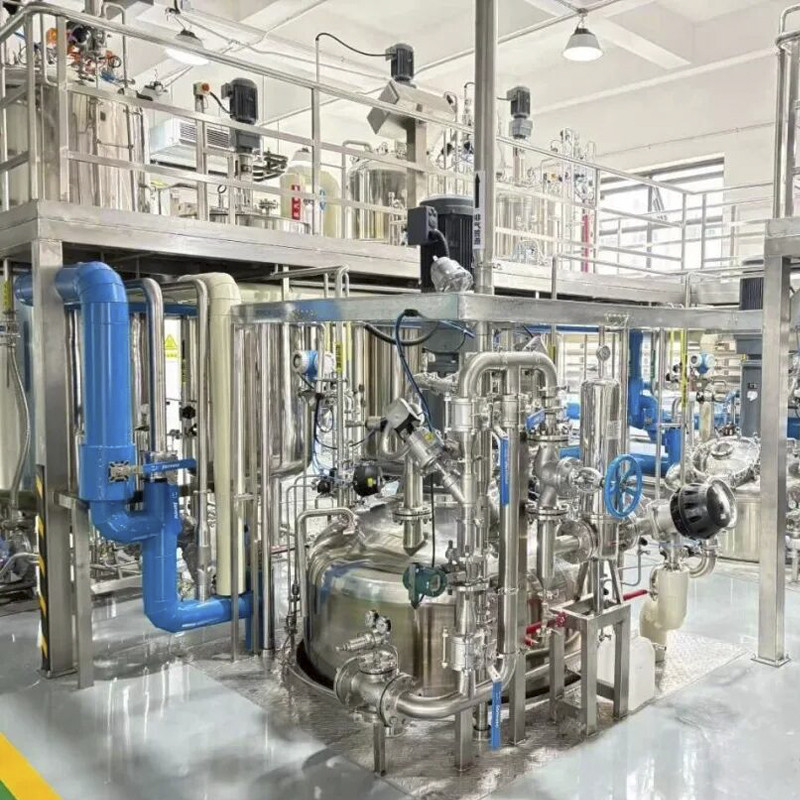
Experts point out that the position of the weld seam is not nitpicking, but rather guarding the last line of defense for safety.
Engineering is no small matter, especially in pressure bearing, high-temperature, flammable and explosive industrial pipeline systems. A distance of 50 millimeters may be the boundary between accidents and safety.
Next time someone says' almost enough ', why not flip out the standards and see how many bloody lessons have been learned behind those few lines.