Characteristics, strategies, and future of CIP cleaning: taking serum-free medium in biopharmaceuticals as an example
- Share
- Issue Time
- Jan 9,2026
Summary
In the biopharmaceutical industry, there exists an invisible yet crucial "red line" - bacterial endotoxin.

In the biopharmaceutical industry, there is an invisible but crucial 'red line' - bacterial endotoxins.
It does not show any obvious signs, but it can cause high fever, shock, and even death in patients' bodies; It may also silently destroy a whole batch of cell culture products worth millions, rendering months of research and development efforts in vain.
In this battle against the 'invisible killer', a crucial but often overlooked aspect is the cleaning of serum-free culture medium production equipment.
Especially for the needle grinding system used in the production of dry powder culture media, it can be called the "hard bone" in the cleaning process.
Needle grinder: an efficient pulverizer and a breeding ground for pollution
The needle mill uses a high-speed rotating rotor and dense needle bars on the stator to collide and shear with each other, uniformly crushing components such as amino acids, sugars, and inorganic salts into micrometer sized powders. This structure brings extremely high mixing efficiency, but also lays hidden dangers:
The gap between the needle bars is extremely small, and the powder is easily stuck in blind spots; The components of the culture medium themselves have viscosity and are prone to clumping when wet or heated; The high-speed running shaft seal area is difficult to thoroughly flush, becoming a "hiding place" for microbial growth.
Once the cleaning is not done properly, the residue will not only cause cross contamination between batches, but also release bacterial endotoxins - which is an absolutely unacceptable risk for downstream production of cell therapy or injectable biopharmaceuticals.
Traditional cleaning is not enough, 'cleanliness' must speak with data
In the pharmaceutical industry, 'looking clean' is far from enough. True cleanliness must be demonstrated through quantifiable, reproducible, and verifiable methods. This is the core mission of CIP (Clean in Place) system.
A complete CIP process usually includes: pre flushing: quickly washing away loose powder to prevent subsequent agglomeration; Alkaline washing (70-80 ° C, 0.5-2% NaOH): dissolves proteins, saponifies lipids, and kills microorganisms; Intermediate flushing: remove alkaline solution and dissolved substances;
Acid washing (optional): Remove inorganic salt deposits; Final rinsing: Rinse with purified water or water for injection (WFI) until the conductivity, pH, and TOC meet the standards; Disinfection (if necessary): Steam or peracetic acid treatment to further control microorganisms.
But for needle mills, having standard procedures alone is not enough. The cleaning solution must form strong enough turbulence (Reynolds number>3000) to penetrate the needle rod array and "flush" the adhered particles.
This requires precise nozzle design, sufficient pump pressure, and even in some cases, pulse flushing or short-term soaking to allow cleaning agents time to penetrate stubborn residues.
Cleanliness is not the end, but the starting point of quality
In the needle grinding workshop, the surface smoothness Ra of the equipment is ≤ 0.8 μ m, and the structural design strives for no dead corners.
The CIP system is intelligently controlled by PLC, and every step of temperature, flow rate, and time is accurately recorded. More importantly, they have reserved sampling points for wiping samples or rinsing water testing - making every cleaning traceable and verifiable.
Behind this is a quality philosophy of "controlling risks from the source". Although the culture medium is not directly injected into the human body, it is the "soil" for cell growth. How can safe and effective drugs grow in soil that is not clean?
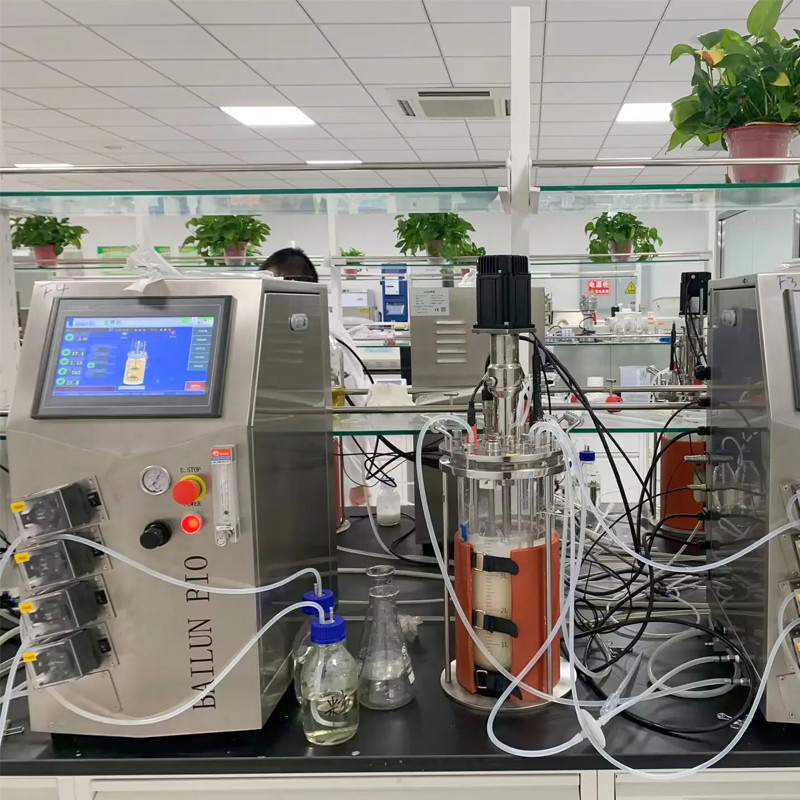
With the integration of AI and IoT technology, future CIP systems will be able to monitor TOC in real-time and automatically adjust cleaning time; Environmentally friendly enzyme cleaning agents are expected to replace strong acids and bases; Water saving design will also reduce resource waste.
But for core equipment like needle mills, the physical structure determines the difficulty of cleaning. Only by continuously optimizing the process and strictly verifying can we maintain that safety red line.
On the high-precision track of biopharmaceuticals, true "cleanliness" has never been a slogan, but a cornerstone of trust built up through repeated cycles, data, and verification batches.