The stirring paddle isn't just about "getting the job done"—it must align with your process. In a fermentation tank, knowing when to stir gently is more important than stirring aggressively
- Share
- Issue Time
- Jan 15,2026
Summary
In bioreactor design, the selection of impellers is often treated as a "companion component"—simply pick any standard model that can rotate.
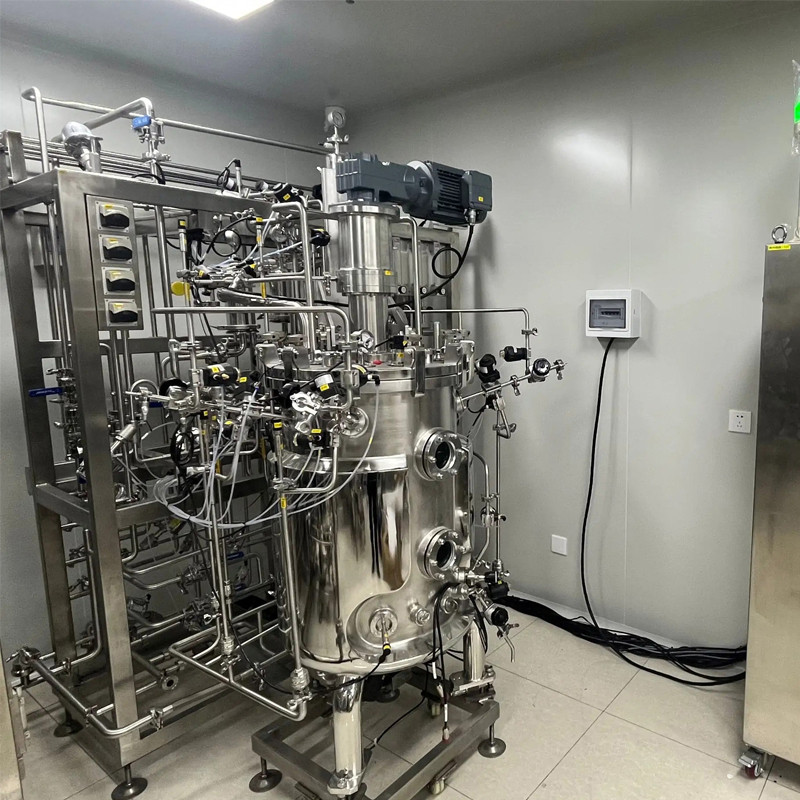

If the paddle type is wrong, you will lose everything.
Dissolved oxygen cannot go up, cells die, foam cannot be controlled... The pot is finally thrown to "unstable process", in fact, the root may be on those leaves.
First, clarify the essential differences between the two mainstream paddles:
Flat bladed propeller (such as a six bladed turbine): featuring a "tough" design.
It fiercely throws the liquid towards the tank wall, forming two large vortices, high shear force, and shattering bubbles - especially suitable for "solid" microorganisms such as bacteria and yeast.
They are not afraid of stirring, but instead require high dissolved oxygen and strong dispersion. So traditional antibiotics and amino acid fermentation all use it.
Slanted blade propeller (such as 45 ° inclined blade or marine propeller): It follows the route of "softness with rigidity". The main direction of flow is the up and down axis, like a water pump, which draws down the upper liquid and flows back along the tank wall after hitting the bottom, forming a large circulation.
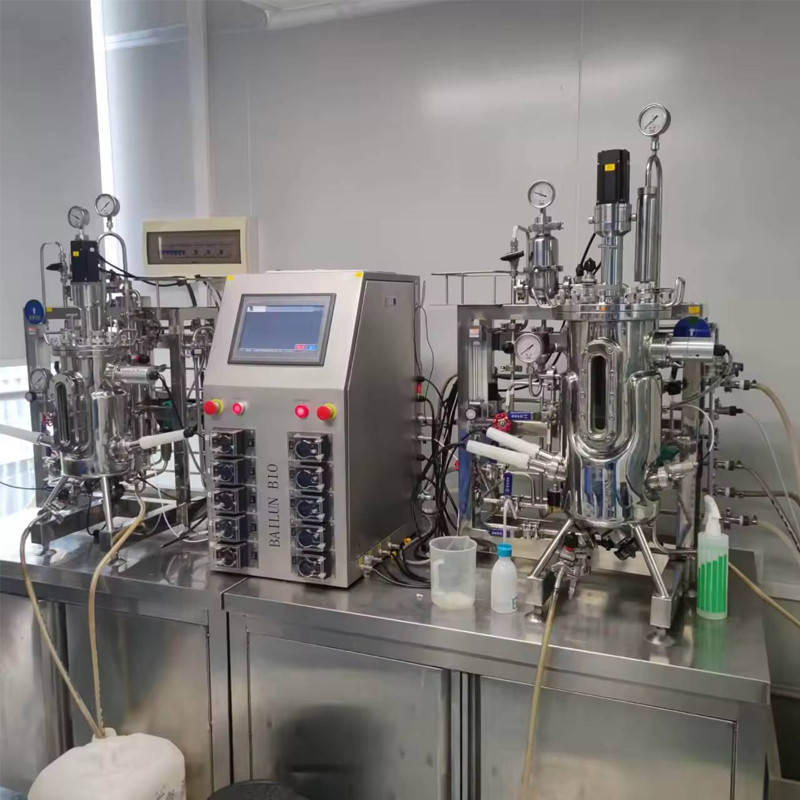
Cut low and mix evenly, making it more friendly to mammalian cells and insect cells, known as "glass hearts".
Many people think that 'inclined blade propeller=gentle=omnipotent', but it is not.
In low viscosity systems, the tip of the inclined blade still generates a high shear turbulence zone - which is precisely the key to breaking up bubbles and improving kLa (oxygen mass transfer coefficient).
However, this high shear zone is concentrated near the propeller, unlike flat bladed propellers that are filled with violent output.
The key question is: Is mixing fast or not?
Don't just stare at the dissolved oxygen meter. The mixing time (tm) is the hidden indicator.
For example, adding alkali to adjust the pH, if it is not mixed evenly within 30 seconds, the local pH will soar to 9, and sensitive cells will "shock" on the spot. Large tanks are particularly dangerous - the surface is filled with material, and it is unknown what has happened at the bottom.
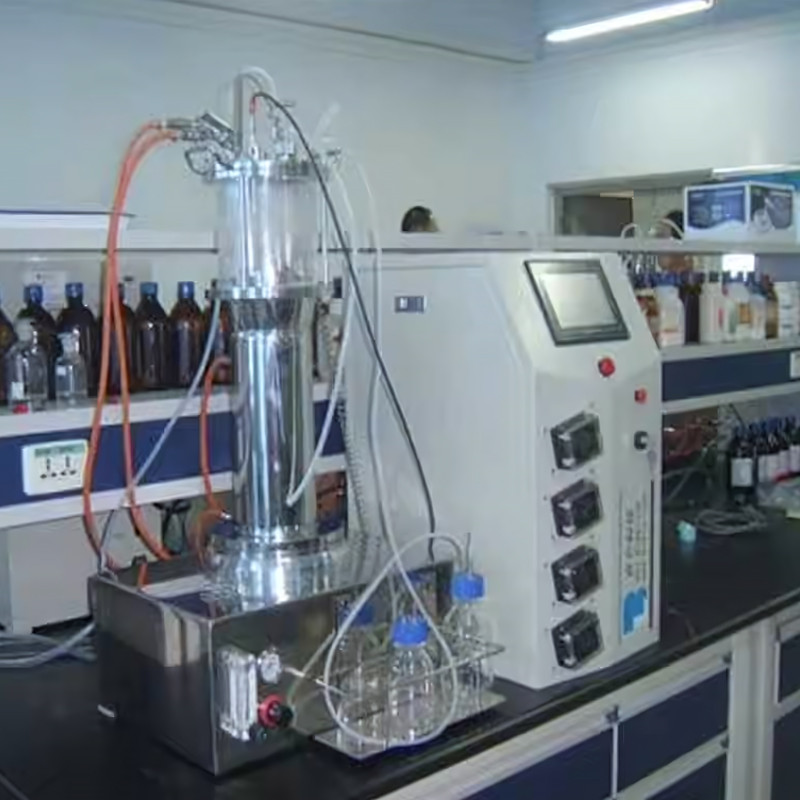
A study has tested that under the same power, the mixing time of inclined blade propellers is nearly half shorter than that of flat blade propellers.
Why is biomanufacturing a national strategy? High performance bacterial strains rely on imports, high-end fermentation tanks and sensors are controlled by humans, and the underlying design software is almost blank ..
Why? Because flat bladed propellers can easily cause "flow partitioning" - there is a weak mixing zone between the upper and lower vortices, like an isolation layer; The axial pumping of the inclined blade propeller directly connects the upper and lower parts, resulting in high circulation efficiency.
But this does not mean that flat bladed propellers should be eliminated. High density Escherichia coli fermentation? High heat generation and oxygen consumption require the strong radial flow and wake effect of flat bladed propellers to tear the air into micrometer sized bubbles in order to feed the microbial community.
In such scenarios, the inclined blade propeller often lacks strength despite having the heart to spare.
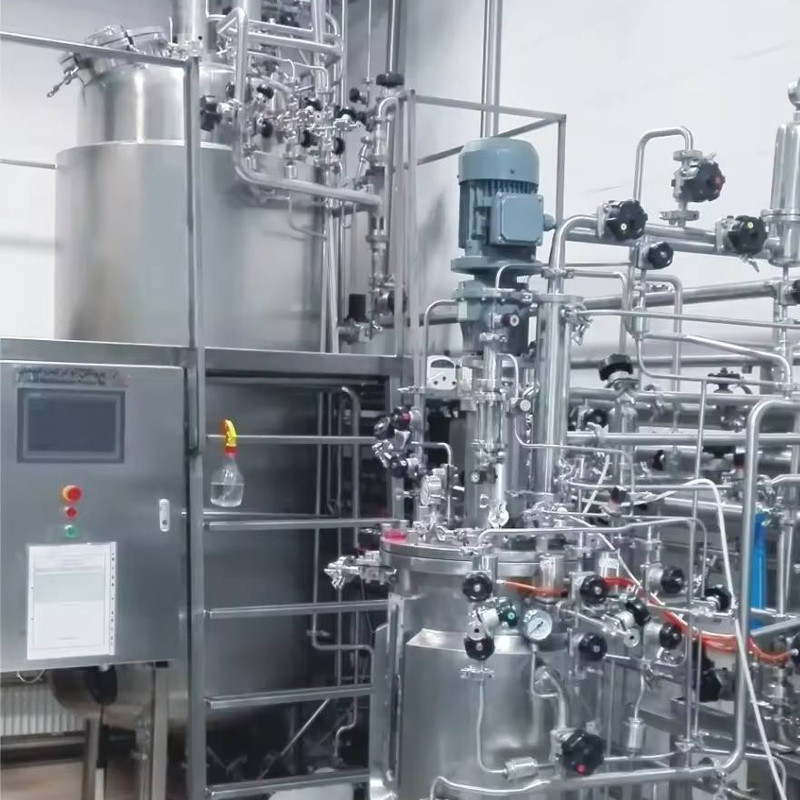
In actual selection, three accounts need to be calculated:
Cell tolerance
Mammalian cells? Priority oblique leaves; Bacteria and fungi? Consider flat leaves.
Oxygen transmission demand
High OUR (oxygen uptake rate) process, don't be afraid of cutting, first maintain dissolved oxygen.
Tank size
There is no problem with using diagonal blades for a 50L small can; If only a single layer of inclined blades is used for a 50 ton tank, there may be stagnant water at the bottom.
At this time, a combination of propellers is often used - the lower level flat blades inflate the air, and the upper level inclined blades promote circulation.
One final reminder: Laboratory data cannot be directly magnified.
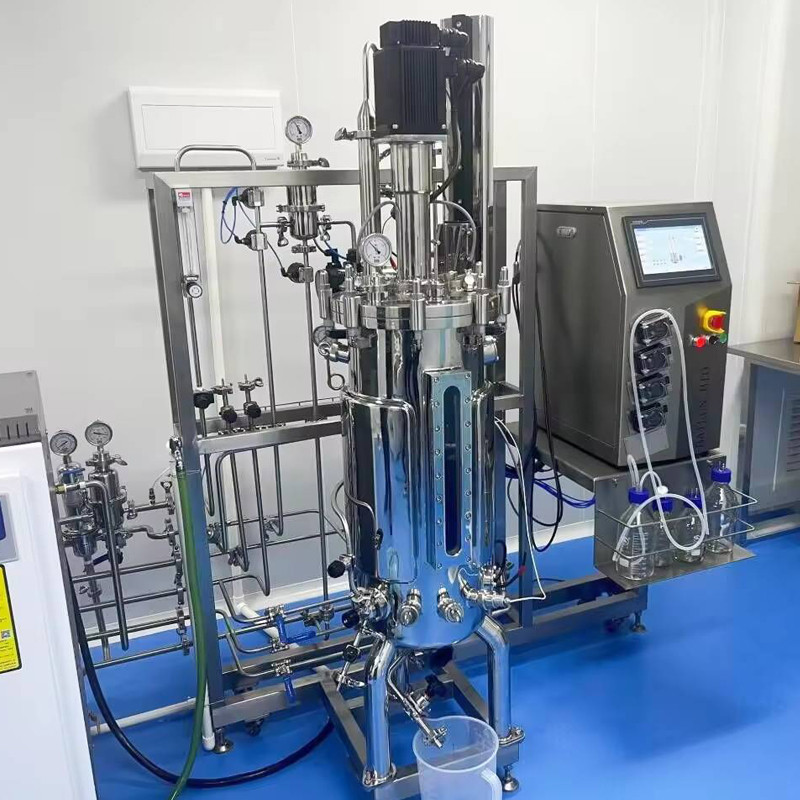
The small tank has a high Reynolds number and fast mixing, but when switched to the production tank, the flow field structure changes completely.
It is best to measure the mixing time during the pilot stage (such as using pH step or conductivity method), instead of waiting for hundreds of upgrades to discover that it cannot be mixed.
At the end of the day, the stirring blade is not a standard screw, it is the "pacemaker" in the reactor - jumping too hard, the cells cannot bear it; Jumping too weakly, metabolism cannot keep up.
Choosing the right paddle means making the entire system breathe smoothly and rhythmically in sync.